Moving to Houston: A 2026 Cost of Living and Relocation Guide
Property taxes, no state income tax, commute realities, and where transplants are landing.
August 25, 2026 | Raquel Refuerzo
Houston was the single largest population gainer in the country last year, and it has held the top spot among U.S. cities people are moving to. The pull is easy to understand: a paycheck stretches further here than in almost any other major metro, there is no state income tax, and you can still buy a real house with a yard on a middle-income salary. But the picture has a second half that most relocation articles skip. Texas trades income tax for some of the highest property taxes in the country, the commute is longer than newcomers expect, and flood risk varies block by block. This guide gives you both halves, with current 2026 numbers, so you can budget honestly before you sign anything.
Quick Takeaways
- Houston's cost of living runs roughly 7 percent below the national average, with housing about 20 percent cheaper than the U.S. norm.
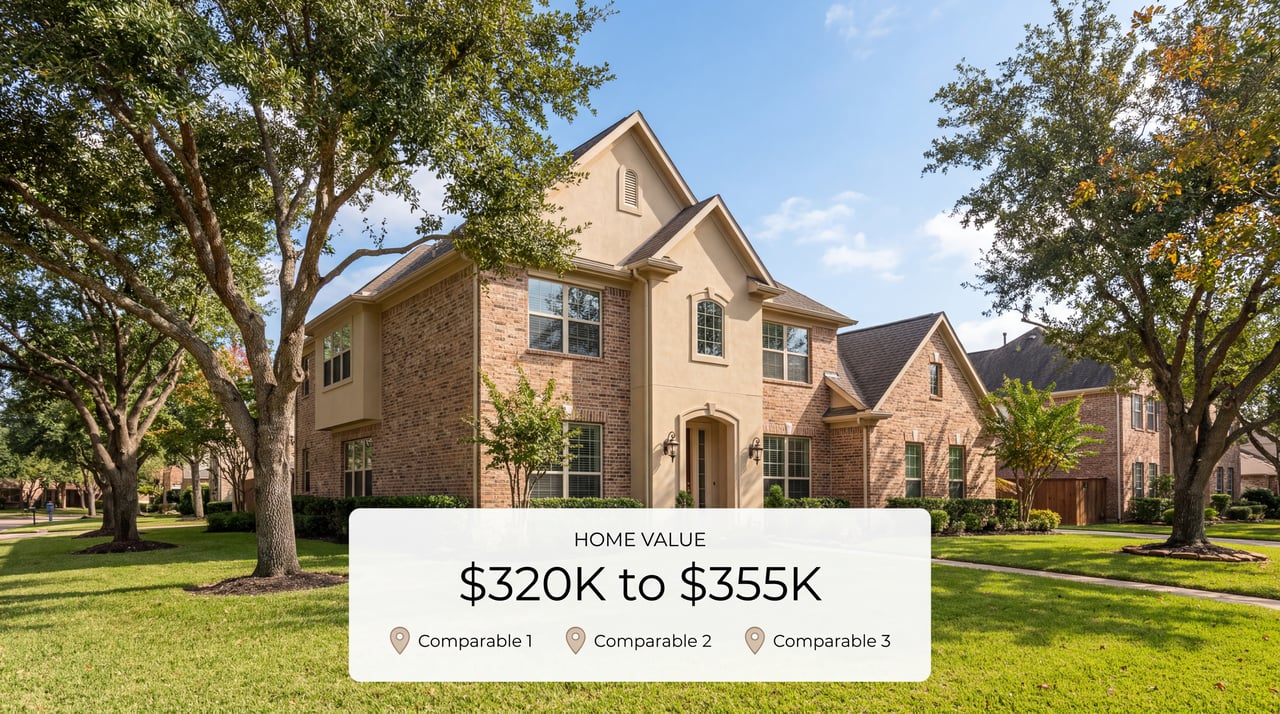
- The metro median home price sits around $330,000 to $335,000 as of early 2026, below the national median of roughly $360,000.
- Texas has no state income tax, but Harris County's effective property tax rate is about 2.03 percent, well above the national average near 1 percent.
- The school district homestead exemption rose to $140,000 for the 2026 tax year, saving a typical homeowner roughly $1,230 a year in school taxes alone.
- The average Houston commute is about 42 minutes. This is a car city, and where you buy determines how much of your day you spend in traffic.
- Transplants are concentrating in Katy, Cypress, Pearland, Sugar Land, The Woodlands, Spring, Conroe, and fast-growing Fulshear.
What It Actually Costs to Live in Houston in 2026
Houston remains one of the few large U.S. metros where the math still favors the resident. The Council for Community and Economic Research puts Houston's living costs about 7 percent below the national urban average, and roughly 25 percent below the average of the country's most populous metros. Single residents budget around $2,300 a month in core expenses, while a family of four lands closer to $5,100.
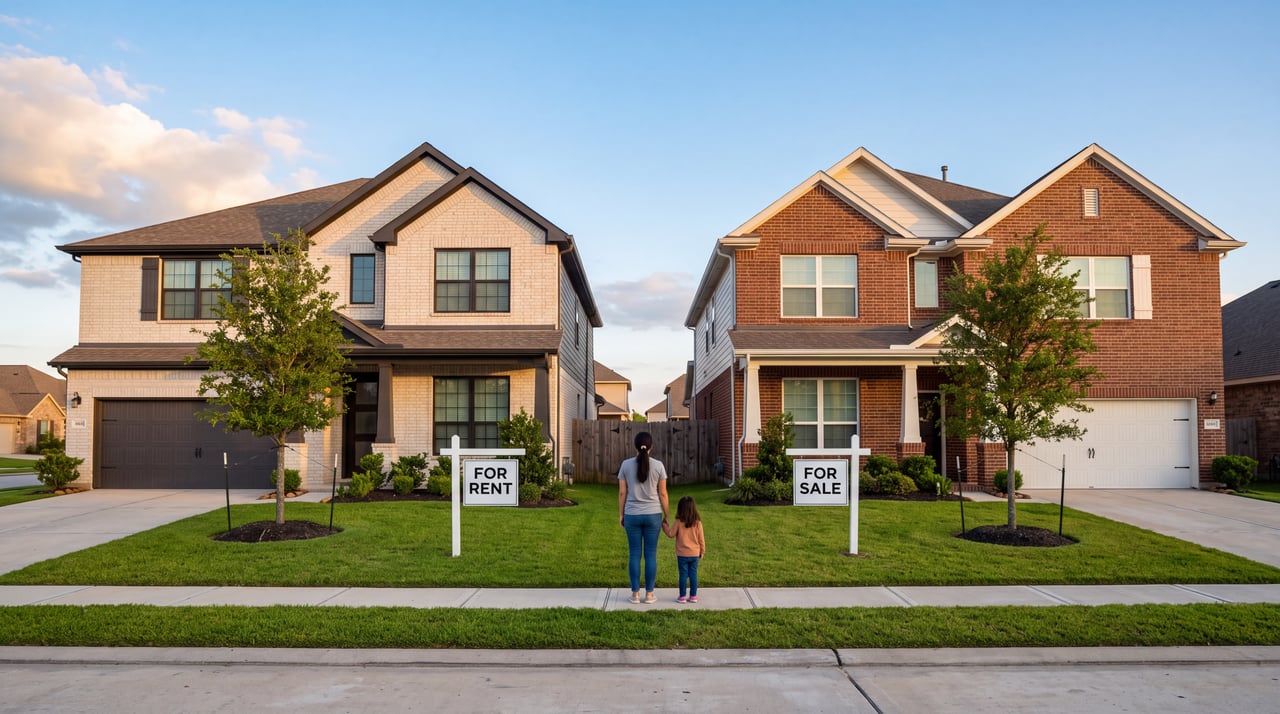
Housing does the heavy lifting on affordability. Houston housing costs run about 20 percent below the national average. A one-bedroom apartment rents for roughly $1,200 to $1,250 a month, and a two-bedroom averages $1,480 to $1,570 depending on the neighborhood. If you are weighing whether to rent first or buy right away, the local rent-versus-own math is worth running carefully before you commit.
A few categories run close to or slightly above the national line. Utilities are a touch cheaper on paper but spike in summer because air conditioning runs hard from May through September. Budget $150 to $300 a month for electricity alone in the warm months. Groceries get a quiet boost from Texas tax policy: there is no sales tax on unprepared staples like meat, produce, and milk, which saves you 8.25 percent at the register every trip. For a fuller line-item breakdown, see the complete Houston cost of living guide.
Here is how the major monthly categories stack up against the national average.
Category | Houston vs. National Average |
|---|---|
Overall cost of living | About 7% lower |
Housing | About 20% lower |
Utilities | About 9% lower |
Groceries | About 2% lower |
Healthcare | About 3 to 4% lower |
Median home price | $330K to $335K (national ~$360K) |
Median 1-bedroom rent | $1,200 to $1,250 |
The No State Income Tax Tradeoff
This is the number that confuses every transplant, so it is worth slowing down on. Texas charges no state income tax. That is real money, especially for high earners coming from California, New York, or Illinois, where state income tax can take 5 to 13 percent of every paycheck. Houston recoups some of that lost revenue through property tax, which is high by national standards.
The Harris County effective property tax rate runs around 2.03 percent of taxable value, compared with a national average closer to 1 percent. On a $350,000 home, that difference matters. But the net tax burden still tilts in Houston's favor for most relocating households, because the income tax savings usually outweigh the property tax bump, particularly for two-income families and anyone earning above the median.
Two important details that newcomers miss:
First, your property tax is calculated on taxable value, not the price you paid, and Texas gives homeowners meaningful exemptions to lower that figure. The school district homestead exemption increased to $140,000 for the 2026 tax year after Texas voters approved Proposition 13 in November 2025. That single change saves a typical Houston homeowner roughly $1,230 a year in school taxes, with the statewide range running from about $500 to $1,800 depending on your district. Harris County adds an optional 20 percent homestead exemption on top of that. Homeowners 65 and older, and those with qualifying disabilities, get an additional $60,000 school exemption and a freeze on their school tax bill.
Second, the exemption is not automatic. You file Form 50-114 with the Harris County Appraisal District, and the deadline for the current tax year is generally April 30. Filing is free, and you can file up to two years late to recover missed savings. The full mechanics, including how to protest an inflated appraisal, are covered in Houston property taxes: what homeowners need to know.
One caution worth stating plainly: the homestead exemption applies only to your primary residence. If you are buying an investment property, it faces full assessed value with no homestead protection, so run those numbers separately.
The Commute Reality No One Tells You About
Houston is a driving city, and pretending otherwise is the fastest way to regret your home purchase. The average commute is about 42 minutes each way, and the metro is built around freeway corridors rather than transit. A METRO monthly pass runs roughly $40 to $65 and single rides are $1.25, but for most residents the daily cost is closer to $500 to $700 a month once you factor in gas, insurance, and upkeep on a car.
Where you live decides how much of your life you hand over to I-10, I-45, and SH-288. A few patterns hold true:
The Energy Corridor along I-10 West anchors BP, ConocoPhillips, Shell, and dozens of energy employers. Memorial and Katy sit roughly 15 minutes out, while Cypress runs closer to 25. The Texas Medical Center, the largest medical complex in the world, draws workers from the Museum District and West University in about 5 minutes, Bellaire in 15, and Pearland in around 25. Downtown commuters tend to cluster inside the Loop or along the rail-served corridors to keep the drive sane.
Before you fall for a house, drive the actual route at the actual hour you would be commuting. A home that is 18 miles from your office can be a 25-minute trip at 10 a.m. and a 70-minute trip at 8 a.m. The Houston commute guide for homebuyers walks through how to evaluate corridors and rail access before you choose a neighborhood.
Where Transplants Are Actually Landing
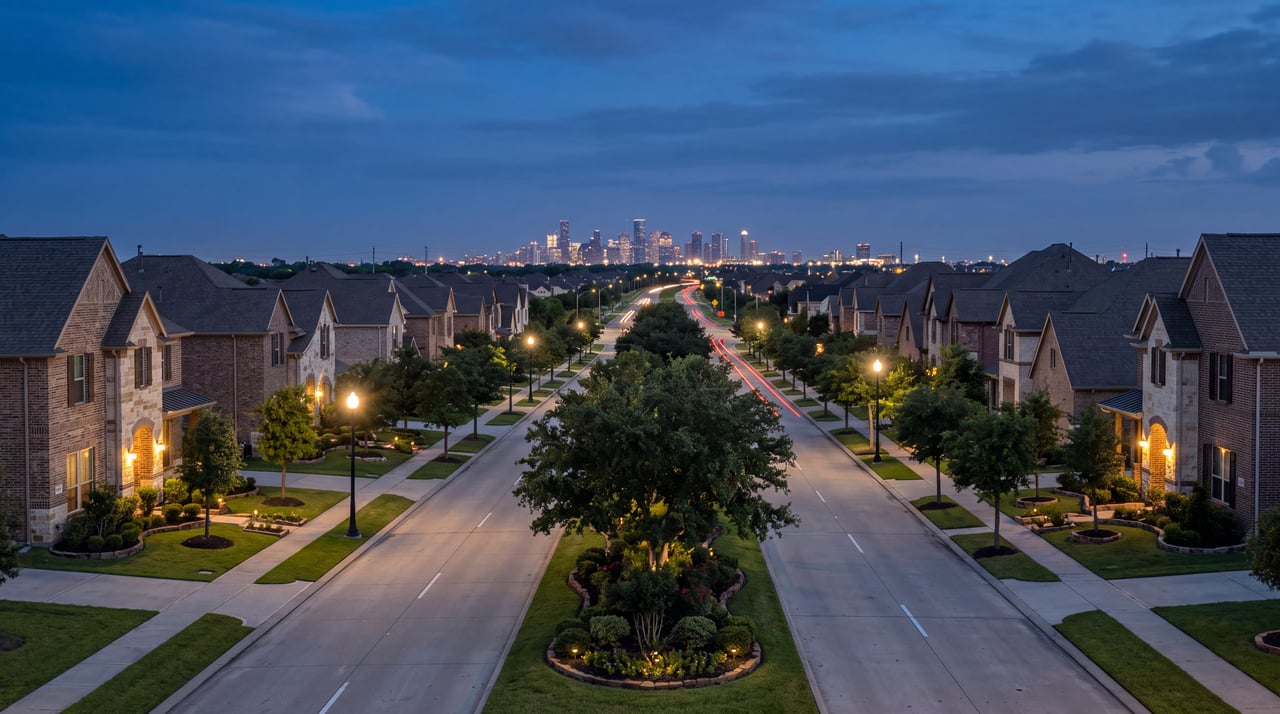
Houston's growth is suburban first. Harris County led every county in the nation in population growth for the fourth straight year, adding just under 50,000 residents, and neighboring Montgomery and Fort Bend counties both landed in the national top 10. Translation: the outer ring is where most newcomers are putting down roots, drawn by newer construction, strong school districts, and more house per dollar.
Here is how the most popular relocation suburbs compare. Prices reflect early-2026 area medians and vary widely by ZIP and community within each.
Suburb | Median Home Price | Known For | Approx. Drive to Job Hub |
|---|---|---|---|
Katy | ~$340K | Katy ISD schools, Energy Corridor access | ~15 min to Energy Corridor |
Cypress | $350K to $400K range | New construction, price flexibility, Cy-Fair ISD | ~25 min to Energy Corridor |
Pearland | ~$375K | Strong value, Pearland ISD | ~25 min to Medical Center |
Sugar Land | ~$432K | Top-ranked safety and schools, Fort Bend ISD | ~30 min to downtown |
The Woodlands | ~$627K | Premier master-planned community, parks | ~30 to 40 min to downtown |
Spring | ~$251K to $350K | Affordability near The Woodlands | ~25 min to The Woodlands |
Conroe | Below national median | Lake Conroe, booming millennial draw | ~45 min to downtown |
Fulshear | New construction premium | Newest neighborhoods, fast growth | ~30 to 45 min to downtown |
The Family Suburbs
If schools and master-planned design top your list, Katy and The Woodlands lead the pack. Katy gives families the best purchasing power per dollar among the top-tier districts, while The Woodlands sits at the premium end and prices accordingly. Sugar Land ranked as the highest-rated Houston-area community on the 2026 U.S. News Best Places to Live list, helped by low crime and Fort Bend ISD.
The Value Plays
Pearland consistently delivers strong schools at a lower price point than the prestige suburbs, with a straight shot down SH-288 to the Medical Center. Cypress is the middle ground, mixing new construction with price flexibility under Cy-Fair ISD. Spring and Conroe push affordability further north, and Conroe in particular has become a magnet for millennial movers chasing space without giving up access to a major job market.
For a side-by-side look at how these communities rate on schools, safety, and amenities, see best Houston neighborhoods for families and the Houston school districts guide.
The Houston Job Market
Affordability only matters if the income is there, and Houston's economy continues to outpace the national rate of job growth. The metro spreads risk across several major sectors rather than leaning on one: energy still anchors the region, but health care centered on the Texas Medical Center, aerospace tied to NASA's Johnson Space Center, manufacturing, logistics, and a growing technology base round out the base. Multiple Fortune 500 companies are headquartered here.
That diversification is the quiet reason Houston keeps attracting newcomers even as national job growth has cooled. The median household income sits near $64,800, and because housing costs are so much lower than coastal metros, that income carries more weight than the raw number suggests.
Two Things to Verify Before You Buy
Flood risk is the first. Houston's flood exposure is hyperlocal, and two homes on the same street can carry very different risk. Some of the most desirable areas, including levee-protected Sugar Land, The Heights, and Garden Oaks, sit in low-risk Zone X, while others require flood insurance that adds real money to your monthly payment. Always check a property's flood history and FEMA zone before you make an offer. Start with flood zones in Houston: what buyers should know.
Property tax surprises are the second. Because your bill is based on appraised value that the county updates annually, your payment can rise even if rates stay flat. Build in room for that, file your homestead exemption the moment you close, and protest your appraisal if it comes in high.
When you are ready to move from research to action, the 10-step home buying guide for Houston lays out the full process from pre-approval to closing, and the broader moving to Houston relocation guide covers neighborhoods, schools, and climate in more depth.
The Bottom Line
Houston earns its reputation as a relocation magnet. The cost of living is genuinely lower, the no-income-tax math favors most movers, and the suburbs deliver space and schools that coastal transplants cannot find at the same price. The honest caveats are the property tax structure, the commute, and the flood map, all of which are manageable once you know to plan for them. Get clear on your target corridor, run your real numbers including taxes and insurance, and you can land in Houston with your budget intact and your expectations met.
If you are relocating and want a local who can match a specific suburb to your commute, school, and budget priorities, that is exactly the conversation worth having before you start touring.
Related Keywords:
moving to Houston 2026, Houston cost of living, relocating to Houston, Houston property taxes explained, best Houston suburbs for transplants