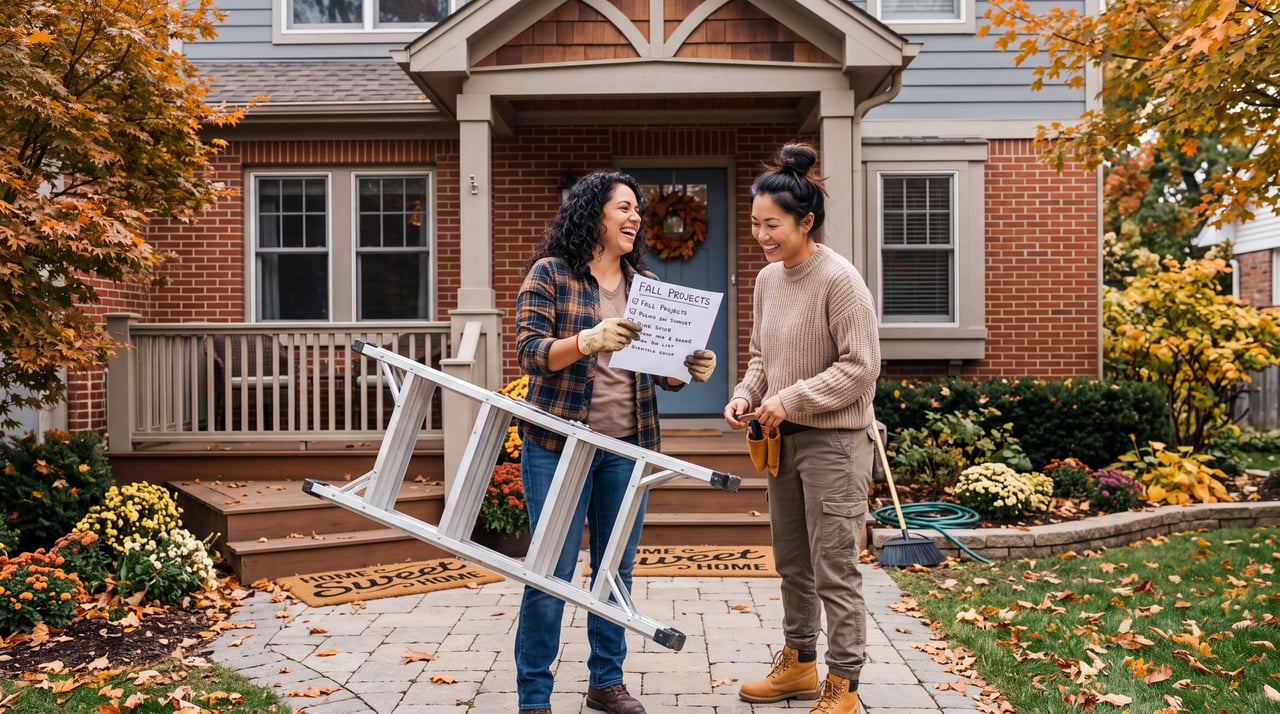
Fall Home Maintenance Checklist for Houston Homeowners
Post-storm-season inspections, HVAC and gutter prep, and the small fixes that protect your home's value before winter.
September 29, 2026 | Raquel Refuerzo
Late September is the quiet window most Houston homeowners overlook. The brutal heat is breaking, hurricane season is winding down for our stretch of the Gulf, and the first real cold front is still weeks away. That gap is exactly when smart maintenance happens. Storm season effectively ends here by late September in a typical year, and Houston's first freeze usually does not arrive until December, which leaves you a clean runway to catch what summer broke and harden the house before winter tests it.
This is not busywork. Deferred maintenance is the single most predictable way Houston homeowners quietly lose equity. The roof leak you ignore in October becomes the inspection report finding that kills your sale price in March. The hose bib you never wrapped becomes a burst pipe in January. Working with investors for more than a decade has made one thing obvious to me: the homeowners who treat their property like an asset, and maintain it on a schedule, consistently keep more of its value than the ones who react to emergencies.
Here is the checklist I give my own clients, built for Houston's climate and timed for fall.
Quick Takeaways
- Houston's storm season usually ends by late September, making early fall the ideal time for a post-storm roof and gutter inspection before winter rain arrives.
- Houston's first freeze typically holds off until December, so you have time to schedule HVAC, plumbing, and roofing work before demand and prices spike.
- The single most expensive winter risk in Houston is frozen pipes. State Farm reported the average frozen-pipe claim recently topped $30,000, and almost all of it is preventable.
- Foundation drainage matters more here than in most markets because Houston's expansive clay soil shifts with wet and dry cycles.
- Small, documented fall repairs protect your appraisal value and prevent surprise findings when you eventually sell.
Start With a Post-Storm Roof and Gutter Inspection
Your roof took the worst of the summer. Even in a below-normal hurricane year like 2026, Houston roofs absorb months of UV, wind, and heavy downpours, and damage is often invisible from the ground. Get up close, or hire a pro, and look for loose, cracked, or curling shingles, damaged flashing around chimneys and vents, and excessive shingle granules washing into the gutters, which is a sign the roof is aging out.
October is peak season for roofing tune-ups in Houston for a reason. Catching a small flashing issue now costs a fraction of what an interior water-damage repair costs after the first winter rain. If you suspect storm damage but cannot see it, many local roofers use infrared cameras to find moisture trapped under the surface that a ground-level look would miss.
Then deal with the gutters. Clogged gutters are one of the leading causes of water damage and foundation problems, full stop. Clear the leaves and debris, confirm water actually flows through and exits away from the house, and check that downspouts are not dumping water against the foundation. If you live in a tree-heavy area like The Woodlands, Spring, or Kingwood, pine needles demand more frequent cleaning than most homeowners expect.
If your home sits in or near a flood-prone area, drainage is not optional. Understanding your exposure matters before the next big rain event, and our guide to flood zones in Houston walks through how to evaluate it.
Service the HVAC Before You Need Heat
In Houston your system spends most of the year cooling. Fall is the handoff, and it is the right time to make sure the heating side actually works before the first cold snap. The most important move is a professional furnace or heat pump inspection that checks the heat exchanger for cracks, cleans the burners, and confirms the electrical connections are sound. A cracked heat exchanger is a carbon monoxide risk, not just an efficiency problem.
Then handle the easy wins yourself. Replace the air filter, because a clean filter improves air quality and lowers your bills. Clear leaves and debris off the outdoor unit. Test the thermostat by running the heat for a few minutes and listening for banging, squealing, or short cycling, all of which signal a problem worth addressing now rather than at 11 p.m. in January.
Two safety items people forget: replace the batteries in your carbon monoxide detectors, and never ignore a gas smell or a CO alert. If you have a programmable or smart thermostat, set it back a few degrees when you are asleep or away. Every degree you lower in winter trims roughly three percent off heating costs.
Protect Your Plumbing for the Freeze That May Come
Houston does not freeze often, but when it does, the damage is catastrophic and the memory of February 2021's Winter Storm Uri still drives how this city prepares. The numbers explain why this belongs at the top of your list rather than the bottom: State Farm reported the average frozen-pipe claim recently exceeded $30,000. A few dollars of foam insulation prevents most of it.
The pipes most at risk are the exposed ones: outdoor faucets, hose bibs, sprinkler systems, and any plumbing running through unheated garages, attics, or along exterior walls. Before the first hard freeze:
- Disconnect and drain all outdoor hoses, then cover hose bibs with foam faucet covers.
- Wrap exposed pipes in foam pipe insulation. Avoid anything that absorbs water, like towels or newspaper, as a permanent solution.
- Seal cracks and gaps near pipes along exterior walls to keep cold air out.
- Locate your main water shutoff valve now and make sure everyone in the house knows how to use it. In a burst-pipe emergency, shutting off the main fast is what limits the damage.
One genuinely Houston-specific wrinkle: the city is split on whether to drip your faucets. During the January 2026 freeze, Houston Public Works asked residents not to leave faucets dripping because heavy citywide dripping strains the water distribution system. Nearby cities like Katy, and many local plumbers, still recommend a slow trickle from a faucet on an exterior wall to keep water moving. The safest play if a hard, multi-day freeze is forecast is to know your shutoff valve, insulate aggressively, and follow your specific municipality's guidance that week.
Check the Foundation and Drainage
This matters more in Houston than in most of the country. Our expansive clay soil swells when wet and shrinks when dry, and that constant movement stresses foundations. After a hot, dry stretch followed by fall rains, that is exactly the cycle that opens cracks.
Walk the perimeter and look for new or widening cracks in the slab, brick, or interior drywall, especially around door frames that suddenly stick. Confirm the ground slopes away from the house so water drains off rather than pooling against the foundation. During dry spells, consistent foundation watering helps keep the soil from contracting too aggressively. These are the same structural items a buyer's inspector will flag later, so addressing them now protects both the house and its resale value. For context on what inspectors actually look for, see our home inspection tips for Houston buyers.
Seal the Envelope and Knock Out the Small Stuff
Houston's humidity and temperature swings warp windows and doors over time, creating drafts that drive up energy bills. Fall is the time to inspect for gaps and re-seal them with caulk or weatherstripping, check window screens, and address peeling exterior paint or cracked siding, which are moisture entry points that lead to wood rot and pests.
A few more items worth a fall slot:
- Flush sediment from the water heater and confirm it is running efficiently before you lean on it for hot water all winter.
- Schedule preventative pest control. Cooler weather pushes rodents and insects to look for warm interior spaces.
- If you have a fireplace, get the chimney swept and inspected before the first cool front to clear creosote buildup.
- Trim tree branches away from the roof and utility lines to cut down on debris and wind damage.
- Clean the dryer vent, an overlooked fire hazard.
DIY Versus Call a Pro
Task | Handle yourself | Hire a professional |
|---|---|---|
HVAC | Replace filters, clear the outdoor unit, test the thermostat | Full furnace and heat-exchanger inspection |
Roof and gutters | Ground-level visual check, clean single-story gutters | Roof inspection, two-story gutter work, any repairs |
Plumbing | Wrap pipes, cover hose bibs, disconnect hoses, locate shutoff | Pre-freeze inspection, water heater flush, repairs |
Foundation | Monitor cracks, manage drainage and watering | Evaluation if cracks are new or widening |
Sealing | Caulk, weatherstrip, replace screens | Larger air-sealing or insulation projects |
When in doubt, the deciding factors are safety and height. Filter swaps and caulking are squarely DIY. Anything involving a heat exchanger, a tall ladder, or your roof structure is worth the professional quote.
Why This Protects Your Home's Value
Every item on this list does double duty. It keeps the house comfortable and safe this winter, and it protects the number you will eventually sell for. Buyers and their inspectors notice deferred maintenance immediately, and every visible problem becomes a negotiation lever against you. A documented maintenance history does the opposite. It signals a well-cared-for home and removes the surprises that erode offers.
If selling is on your horizon, the homes that command top dollar are the ones where this work was already done, quietly, over years. Our guide on how to increase your Houston home's value before selling builds on that idea, and if you are weighing timing, the best time to sell a home in Houston covers how seasonality plays into your strategy.
Maintenance is the least glamorous part of owning a home and the most reliable way to keep it worth more. Spend the fall window now, and your home will be ready for whatever winter brings.
If you want a candid read on what your home is worth today and which improvements actually move the needle in your neighborhood, reach out anytime at 832-415-9228.
Related Keywords: fall home maintenance Houston, Houston home maintenance checklist, post hurricane home inspection, prepare home for winter Texas, protect home value Houston