Is Houston Still a Smart Market for Real Estate Investors in 2026?
Cash flow, rental demand, and the neighborhoods drawing investor attention as the market rebalances.
July 30, 2026 | Raquel Refuerzo
For about three years, Houston rewarded investors who showed up with cash and moved fast. That market is gone. What replaced it is slower, more negotiable, and frankly more interesting if you actually run the numbers. Inventory is up, sellers are cutting prices, and the bidding-war frenzy that made it impossible to underwrite a deal has cooled into something that looks a lot like a normal market again.
So the question every investor is asking heading into the back half of 2026 is fair: with prices flat, rent growth modest, and insurance climbing, is Houston still worth your capital? The short version is yes, but the reasons have shifted. This is no longer an appreciation play you ride for free. It is a cash flow market that pays the disciplined and punishes the lazy.
Quick Takeaways
- Houston's median single-family price is sitting around $322,000 to $335,000, essentially flat year over year, with forecast appreciation of 2 to 5 percent for 2026.
- Inventory has climbed to roughly a 4.5 to 4.8 month supply, well above the national average, which means real negotiating leverage for buyers.
- Investment-grade neighborhoods are producing gross rental yields of 6 to 9 percent and net yields of 4 to 6 percent after expenses.
- No state income tax, no rent control, and landlord-friendly law keep more of every rent dollar in your pocket than almost any other major metro.
- Houston's new short-term rental ordinance took effect January 1, 2026, adding a compliance layer every STR investor now has to manage.
- The deal-killers are predictable: flood zones, foundation issues, insurance, and HOA rental restrictions. Underwrite all four before you sign.
The Market Rebalanced, and That Is Good News for Buyers
Houston spent the post-pandemic years in supply shortage. That flipped. Greater Houston now carries one of the largest supplies of homes for sale among major U.S. metros, with active listings well into the tens of thousands and roughly a 4.5 to 4.8 month supply, compared to a national figure closer to 3.3 months. Around 30 percent of listings have taken a price reduction, and days on market have drifted past 60.
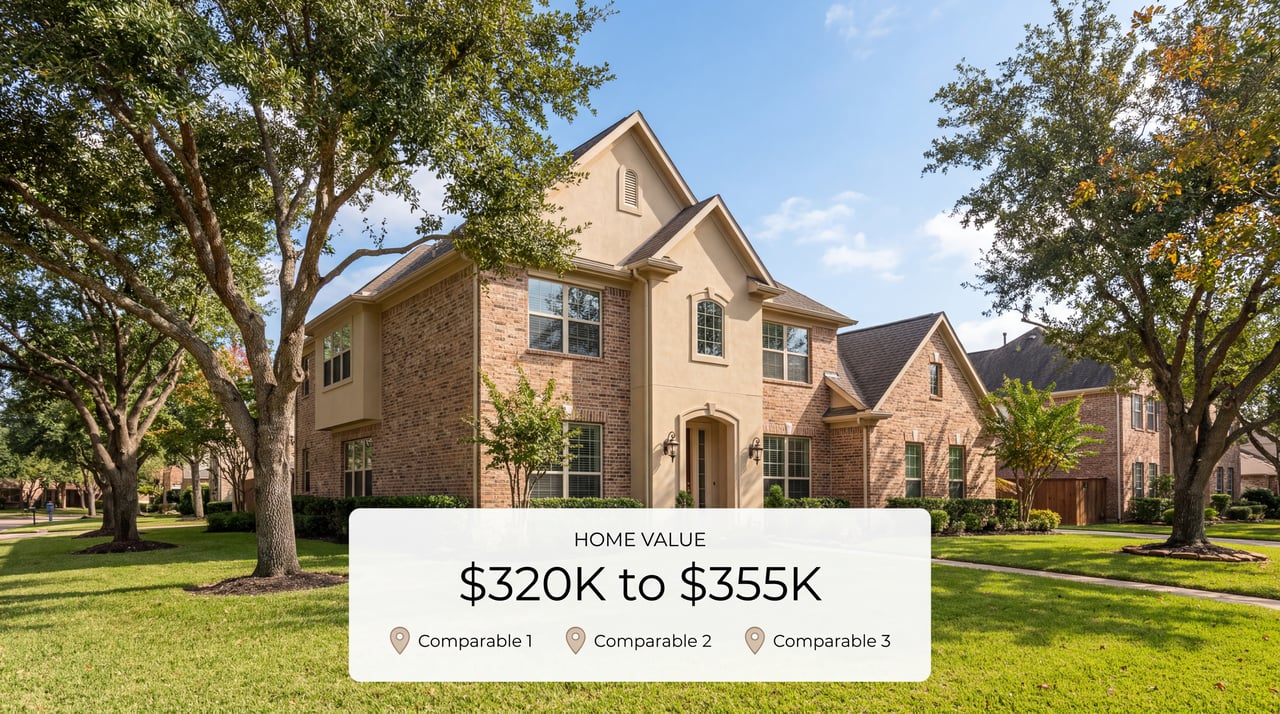
Translate that into investor language: you have time. You can run inspections without competing against five waived-contingency offers, you can negotiate seller credits and rate buydowns, and you can buy below ask on the right property. The median single-family price came in near $322,000 in early 2026, a slight dip from a year earlier. That is not a collapse. It is a market finding its floor while the fundamentals underneath stay intact. For the full picture on where prices are headed, my Houston Housing Market Update tracks the monthly data.
Why Houston Cash Flows When Austin and Dallas Don't
The reason Houston keeps showing up on every "best cities for rental property" list is structural, not hype. Texas charges no state income tax, so your rental income is taxed only at the federal level. There is no rent control. The legal environment is landlord-friendly. And acquisition costs stay low enough that the rent-to-price math actually works, which is increasingly rare in a major American city.
Stack Houston against its in-state rivals and the case sharpens. Austin overheated and is now wrestling with sub-5 percent vacancy and real affordability pressure. Dallas sprawls but lacks Houston's geographic density of job centers. Houston's inner-loop rent premiums run 15 to 20 percent over the suburbs, a smaller spread than Dallas or Austin, which keeps entry points reasonable across the whole metro.
Metro | Typical investor entry | Vacancy | Gross rental yield | Investor profile |
|---|---|---|---|---|
Houston | $320K to $420K | 7 to 8% | 6 to 9% | Cash flow first, steady appreciation |
Austin | $450K and up | Under 5% | 4 to 6% | Appreciation play, thin margins |
Dallas-Fort Worth | $350K to $450K | 6 to 7% | 5 to 7% | Diversified, broad price range |
A 7 to 8 percent vacancy rate is not a weakness. It is healthy. Tight enough that quality units lease in 20 to 30 days, loose enough that you are not feeding an affordability crisis that eventually invites regulation. That is the kind of equilibrium that makes underwriting predictable.
Rental Demand Is the Engine Behind the Returns
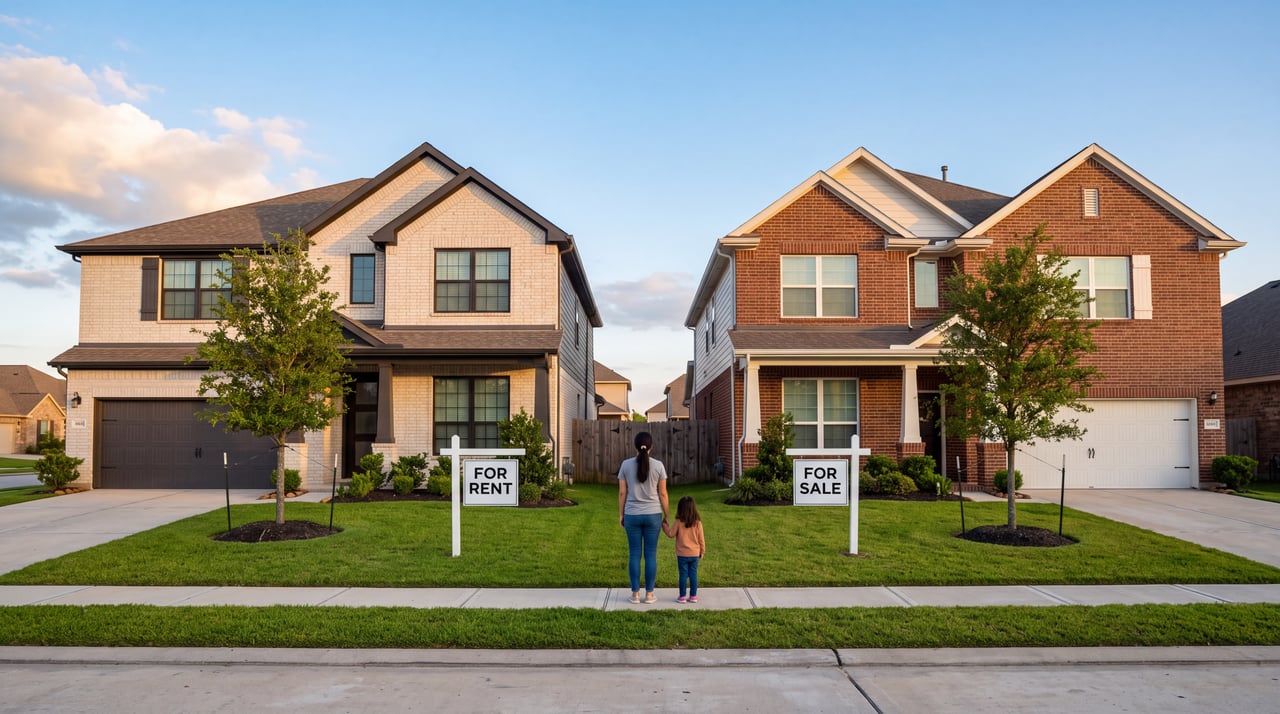
Houston is a renter's city. Roughly 58 percent of households here rent rather than own, a far higher share than the national average. That is a deep, durable tenant pool, and it is fed by an economy that keeps adding people.
The Greater Houston Partnership forecasts about 30,900 new jobs in 2026, pushing the region to a record 3.5 million jobs. Health care alone accounts for around 14,000 of those, nearly half, anchored by the Texas Medical Center and an aging population that is not going anywhere. Construction, public education, and public administration fill in much of the rest, and global names like Eli Lilly, Foxconn, and Inventec are putting real capital into the region. Yes, oil and gas extraction is expected to shed jobs as prices soften, but that is exactly the point of Houston's diversification. The city no longer lives and dies on the rig count.
On the rent side, single-family rentals average roughly $1,550 a month, generally in the $1,300 to $1,800 range depending on location and condition. Citywide rent growth is modest, call it a 0 to 2 percent base case for 2026, with single-family homes in good school zones outperforming flat-to-soft apartment rents. The takeaway for investors: detached single-family in commute-friendly, well-schooled pockets is where the stability lives. A renter-versus-owner breakdown shows just how much of this market is built to rent.
The Neighborhoods Drawing Investor Attention
Houston does not perform as one market. It performs as forty. Picking the wrong submarket is the difference between a property that cash flows on day one and one that sits empty for months. Here is where investor capital is concentrating in 2026.
The suburban cash-flow workhorses lead the list. Katy is the sweet spot: entry prices of $320K to $420K, rents of $2,100 to $2,600, gross yields of 6.5 to 8 percent, and a stable tenant base of families and corporate transfers who do not churn. Cypress is growing fast on the I-290 corridor with the same family-driven demand, and Pearland pulls income-qualified tenants thanks to strong schools and Medical Center proximity.
For investors who want appreciation alongside rent, Oak Forest has quietly outperformed the city average for over a decade, with values up more than 60 percent since 2016. It captures young families and professionals priced out of The Heights but still wanting central access. The Heights itself remains a top tenant-quality market, though inventory is tight and entry is competitive.
If you want trendy with upside, look inner loop. Midtown condos run from about $250K to over $800K with occupancy above 92 percent, and EaDo keeps drawing development and the renters who follow it. For value-focused buyers chasing the strongest cash flow on a budget, Spring Branch and Cottage Grove are where the math is friendliest, often near that new $330,000 entry-level price point.
Strategy | Where to look | Entry range | What you get |
|---|---|---|---|
Suburban cash flow | Katy, Cypress, Pearland | $320K to $420K | Stable tenants, 6.5 to 8% gross yield |
Appreciation plus rent | Oak Forest, The Heights | $400K and up | Long-run value growth, premium tenants |
Trendy inner loop | Midtown, EaDo | $250K to $800K | Walkability, young renters, STR demand |
Budget cash flow | Spring Branch, Cottage Grove | Around $330K | Best yield on lowest entry |
The Costs Smart Investors Underwrite Before They Buy
This is where deals quietly die. Houston's property tax burden runs roughly 2 to 2.5 percent of assessed value, on the high end for a major metro, and it has to live in your cash flow model from day one. Protest your appraisal every single year; it is the cheapest way to protect your margin. My guide to Houston property taxes walks through how the appraisal and protest process works.
Insurance is the other line item that has moved. Texas home insurance has jumped, and on a Gulf Coast property you may also be looking at windstorm and flood coverage. Get a real, written quote before you close, not an estimate, because a single bad insurance number can flip a deal from positive to negative. And run the flood-zone check before you fall in love with a property. Flood zones, foundation conditions, and HOA rental restrictions are the three deal-killers most new investors learn about the hard way.
Short-Term Rentals: Still Open, Now Regulated
Houston was long one of the most permissive STR markets in the country, a byproduct of having no zoning. That changed on January 1, 2026, when the city's first comprehensive short-term rental ordinance took effect. The headline numbers: every operator now needs an annual Certificate of Registration costing $275 per property, must carry $1 million in liability insurance, has to complete human trafficking prevention training, and pays a combined 13 percent hotel occupancy tax on bookings. Fines run $100 to $500 per violation, and starting January 1, 2027 the city will direct platforms to pull unregistered listings.
Here is the part that matters for your model: Houston still imposes no cap on the number of permits and no density or spacing rules. Compared to Austin or Dallas, that is a remarkably low barrier to entry. Short-term rentals in high-demand zones like the Galleria, Uptown, and near the Medical Center can still hit 8 to 14 percent cash-on-cash returns. The door is open, you just have to walk through it legally now. My deeper look at Airbnb profitability in Houston covers the occupancy side of the equation.
So, Is It Still Smart?
Yes, with a caveat that should sound familiar to any serious investor: the easy money is over and the fundamentals are back. Houston in 2026 is not a get-rich-quick market. It is a build-wealth-with-discipline market. You have inventory, you have negotiating leverage, you have a 58 percent renter base fed by record employment, and you have a tax and regulatory regime that keeps more of your return than nearly anywhere else in the country.
The investors who win this year will be the ones who underwrite honestly, protest their taxes, get real insurance quotes, match the submarket to their strategy, and buy the right property at the right number. That has always been the actual job. Houston is one of the few major markets that still pays you to do it well. If you want to pressure-test a specific deal or map a neighborhood to your strategy, that is exactly the conversation I have with investor clients every week. Start with my Houston Real Estate Investment Guide and then let's run your numbers.
Related Keywords:
Houston real estate investing 2026, Houston rental property, investment property Houston, best Houston neighborhoods to invest, Houston cash flow rentals