Houston Closing Costs Explained: What Buyers Actually Pay
A line-by-line breakdown of fees, prepaids, and how to estimate your cash to close.
September 10, 2026 | Raquel Refuerzo
Most Houston buyers spend months obsessing over two numbers: the purchase price and the down payment. Then the title company sends over a settlement statement a few days before closing, and a third number shows up that nobody warned them about. That number is your closing costs, and on a typical Houston home it can add several thousand dollars to the cash you need to bring to the table.
The good news is that closing costs are not a mystery box. Almost every dollar on that statement is a known, predictable line item. Once you can read them, you can plan for them, shop some of them down, and in a market like today's, negotiate a chunk of them onto the seller. Here is exactly what Houston buyers pay, why, and how to estimate your own total before you ever write an offer.
Quick Takeaways
- Houston buyers typically pay 2% to 5% of the purchase price in closing costs, with most financed purchases landing around 3.4% to 4.3%. On a $350,000 home, plan for roughly $10,000 to $14,000 on top of your down payment.
- Texas has no state transfer tax, which is a real advantage over states that charge 1% to 2% just to record a sale.
- Title insurance rates dropped 6.2% on March 1, 2026, the first reduction in over a decade, ordered by the Texas Department of Insurance. Every title company in Texas now charges the same lower promulgated rate.
- In Texas, the seller customarily pays for the owner's title policy, and the buyer pays the lender's policy, which is just $100 when bought at the same closing.
- A large share of your "closing costs" are actually prepaids and escrow reserves, money that funds your future tax and insurance bills, not fees you are losing.
- Your Loan Estimate and Closing Disclosure are the two documents that turn all of this into a real, dollar-specific number you can trust.
What Closing Costs Actually Are (and What They Are Not)
Closing costs are the fees, charges, and prepaid items required to finalize your mortgage and legally transfer the property into your name. They are separate from your down payment. Your down payment buys equity in the home. Your closing costs pay for the services and protections that make the purchase happen: the lender's work, the title search, the insurance, the recording of the deed, and the funding of your escrow account.
It helps to split the total into three buckets. The first is lender and transaction fees, the actual cost of services. The second is prepaids and reserves, money you would owe anyway that simply gets collected up front. The third is credits and adjustments, items like your prorated property taxes that often reduce what you owe at the table. Understanding which bucket each line falls into is the difference between feeling blindsided and feeling prepared.
The Houston Buyer's Closing Cost Breakdown, Line by Line
Here is the detail behind each charge a financed Houston buyer should expect.
Lender and Loan Fees
If you are financing, these are the charges tied to originating your mortgage. They commonly include an origination fee, underwriting, processing, and sometimes discount points if you choose to buy down your rate. Combined, this bucket usually runs 0.5% to 1.5% of the purchase price, or a mix of flat fees plus points. These are the most negotiable fees on the entire statement, because they vary meaningfully from lender to lender. Getting Loan Estimates from three lenders and comparing this section side by side can save you $2,000 to $3,000 on the same loan.
Appraisal and Credit Report
Your lender orders an independent appraisal to confirm the home is worth what you are paying. A standard single-family appraisal in Houston runs about $650 to $900 in 2026, with complex or large properties costing more. The credit report fee is small, usually around $50 to $75. You often pay the appraisal up front rather than at closing.
Title Insurance
Title insurance protects against problems with the property's ownership history: an old lien, a forged signature, a missing heir, a clerical error in the county records. Texas regulates title insurance differently than most states. The Texas Department of Insurance sets a single promulgated rate that every title company must charge, so you cannot shop the premium itself between companies.
There is good news here for 2026. Effective March 1, 2026, the Department of Insurance ordered a 6.2% reduction in basic title premiums, the first cut in over a decade. Under the new schedule, an owner's policy runs roughly $1,768 on a $300,000 home and about $2,262 on a $400,000 home.
In Texas custom, the seller pays for the owner's title policy, so that larger premium typically does not land in your column. As the buyer, you pay for the lender's title policy, which is just $100 when issued at the same closing as the owner's policy, which is standard practice. To understand what this coverage actually protects you from, see our guide on title insurance in Texas.
Survey
A survey confirms the property boundaries, easements, and that no structures cross a line they should not. A new Houston survey runs about $450 to $600. In many transactions the seller can provide an existing survey along with a title company affidavit, which can eliminate this cost. Who pays for a new survey is negotiable in the contract.
Escrow and Settlement Fees
The title company charges a settlement or closing fee for coordinating the transaction, preparing documents, handling the money, and conducting the actual closing. Unlike the promulgated title premium, these ancillary fees are not regulated, so they vary between companies and can be worth comparing. This fee is often split between buyer and seller, with the buyer's portion typically a few hundred dollars.
Recording and Government Fees
These cover the county's cost to officially record the deed and your mortgage in the public record. In Harris County this is modest, usually around $100 to $200. Remember that Texas charges no state transfer tax, so unlike buyers in many other states, you are not paying a percentage of the sale price simply to record it.
HOA-Related Fees
If the home is in a community with a homeowners association, expect transfer fees, a resale certificate fee, and possibly capitalization or working-capital contributions. These vary widely by community and are partly negotiable. If you are buying in a neighborhood with an HOA, our guide to HOA fees in Houston explains what to look for before you commit.
Prepaids and Escrow Reserves: The Part That Surprises People
This is where most buyers get caught off guard, because these items can total more than all the lender fees combined. The important reframe: prepaids are not money you are losing to fees. They fund your own future bills.
Prepaid Interest
You pay interest from your closing date through the end of that month, since your first regular mortgage payment does not arrive until the following month. The amount depends entirely on when you close. Close near the end of the month and you prepay only a few days of interest. Close on the third, and you prepay nearly a full month. This is one lever you can actually time.
Homeowners Insurance
Lenders require you to pay the first full year of homeowners insurance at or before closing. Houston premiums tend to run higher than the national average because of wind, hail, and flood exposure, so budget realistically here, often $2,500 to $4,000 or more depending on the home and your coverage. If the property sits in a flood zone, flood insurance is a separate policy. Before you fall in love with a house, check its flood risk using our breakdown of flood zones in Houston.
Escrow Reserves
Your lender sets up an escrow account to pay your future property tax and insurance bills, and collects a few months of each up front as a cushion. The exact number of months is set by your lender and loan program. Because Harris County property taxes are substantial, the tax reserve is usually the biggest single piece of this bucket.
Property Tax Proration (a Credit, Not a Fee)
Texas property taxes are paid in arrears, meaning the bill for the current year does not come due until January of the following year. When you close mid-year, the seller has lived in the home for part of the year but has not paid those taxes yet. At closing, the seller credits you for their share of the year. You then pay the full bill in January.
This is the key point: tax proration usually shows up as a buyer credit that reduces your cash to close. It is not a fee. It is the seller pre-funding the portion of the tax bill they are responsible for. For the full picture of how the county assesses and bills, see Houston property taxes.
A Sample Cash-to-Close Worksheet
Here is an illustrative breakdown for a $350,000 Houston home with 20% down ($70,000) and a conventional loan. Your actual numbers will differ based on your lender, loan program, close date, and contract terms, but this shows the shape of a typical settlement.
Item | Bucket | Estimated Cost |
|---|---|---|
Loan origination, underwriting, processing | Lender fee | $1,800 to $2,800 |
Appraisal | Lender fee | $650 to $900 |
Credit report | Lender fee | $50 to $75 |
Lender's title policy (simultaneous issue) | Title | $100 |
Survey (if buyer pays) | Title | $450 to $600 |
Escrow / settlement fee (buyer portion) | Title | $300 to $500 |
Recording and government fees | Government | $100 to $200 |
Prepaid interest (varies by close date) | Prepaid | $300 to $900 |
Homeowners insurance (first year) | Prepaid | $2,500 to $4,000 |
Tax and insurance escrow reserves | Reserve | $1,800 to $3,000 |
Estimated closing costs and prepaids | $8,100 to $13,075 | |
Property tax proration | Credit | Reduces cash to close |
Down payment | Equity | $70,000 |
Approximate total cash to close | $78,100 to $83,075 |
Notice that the owner's title policy, often the single largest title charge, does not appear in the buyer's column because the seller customarily pays it in Texas.
Who Pays What in Texas
Cost | Buyer | Seller | Negotiable |
|---|---|---|---|
Lender and loan fees | Yes | ||
Appraisal and credit report | Yes | ||
Lender's title policy | Yes | ||
Owner's title policy | Yes (custom) | Yes | |
Survey | Often | Sometimes | Yes |
Escrow / settlement fee | Split | Split | Yes |
Recording fees | Yes | ||
Real estate commissions | Yes | Yes | |
Prepaids and reserves | Yes | ||
Property tax proration | Credited | Owes share | |
Closing cost credits | Receives | Pays | Yes |
Almost every line in the "negotiable" column is in play in today's Houston market.
How to Lower Your Closing Costs
Closing costs are not fixed in stone. Here is where Houston buyers can actually move the number.
Ask the seller for a closing cost credit. With around 30% of Houston listings seeing price reductions and days on market drifting higher, sellers are more willing than they have been in years to contribute toward buyer closing costs or fund a rate buydown. This is one of the most powerful tools available, and it is the centerpiece of how to negotiate when buying a home in Houston.
Shop your lender. The fee section of your Loan Estimate is where the real variation lives. Comparing three lenders on the same loan amount and rate can save thousands.
Time your closing. Closing later in the month reduces prepaid interest. It is a small lever, but it is free.
Compare title company ancillary fees. The title premium is fixed by the state, but escrow, document prep, and other service fees are not regulated and do vary.
Check first-time buyer programs. Several Houston programs offer down payment and closing cost assistance. Our guide to Houston first-time homebuyer programs walks through who qualifies.
How to Estimate Your Real Cash to Close
You do not have to guess. The mortgage process gives you two documents designed to pin this down.
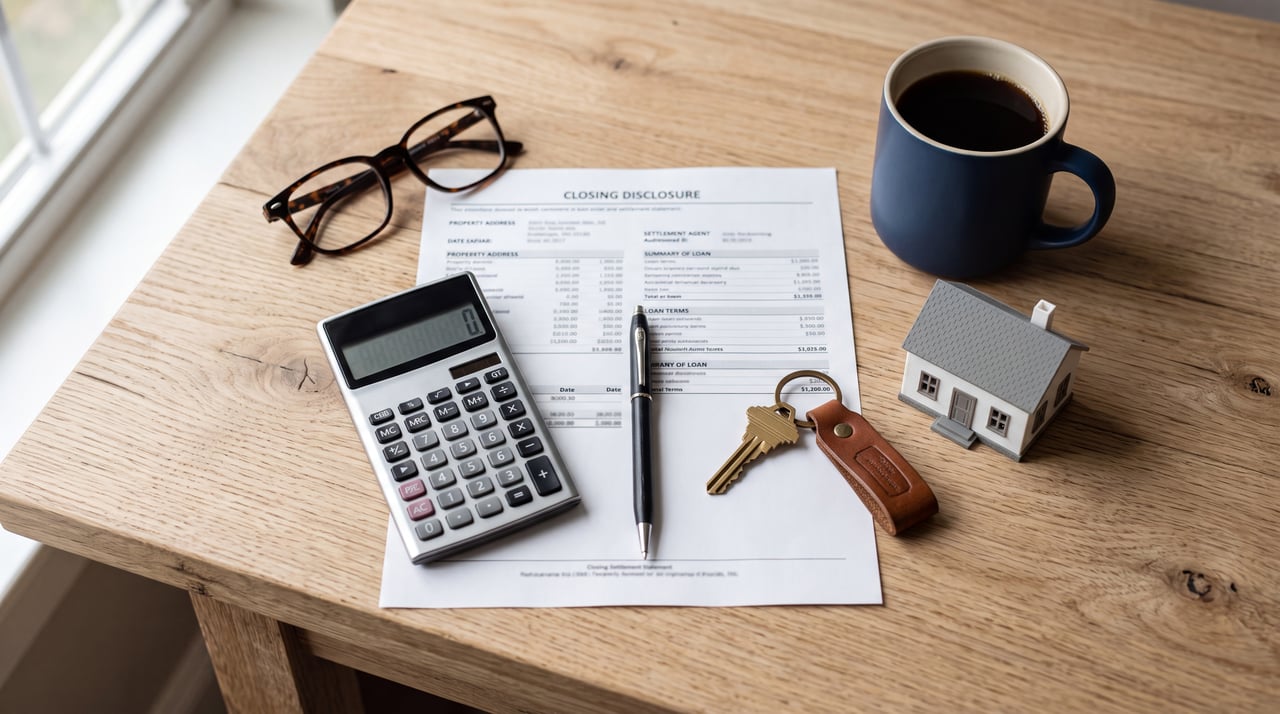
Within three business days of applying, your lender must send a Loan Estimate, a standardized form that lists every fee, prepaid, and reserve. Use it to compare lenders and to get your first realistic total. Then, at least three business days before closing, you receive the Closing Disclosure, the final version of those numbers. Compare the two side by side, and question any line that moved significantly.
Two other amounts reduce your cash at the table. Your earnest money and your option fee, both paid shortly after your offer is accepted, are credited back to you at closing. To understand how those work, read up on earnest money in Houston. And for a full sense of what closing day itself looks like, see what happens at closing in Texas.
The Bottom Line
Closing costs feel intimidating only because they arrive late and unexplained. Broken down, they are a predictable set of line items, and a meaningful share of them are either negotiable or are simply your own future bills being collected early. Budget 2% to 5% of the purchase price, get Loan Estimates from multiple lenders, and lean on a market that currently favors asking sellers to share the load.
If you want a clean, personalized estimate before you start touring homes, that is exactly the kind of number worth nailing down early. Pair it with our guides on how much house you can afford in Houston in 2026 and the full 10-step Houston home buying guide, and you will walk into your purchase knowing every dollar before it shows up on the statement.
Related Keywords: Houston closing costs, closing costs for buyers Texas, how much cash to close Houston, buyer closing costs explained, Houston home buying fees