Beat the Heat: Lower Your Houston Energy Bills With Smart Home Upgrades
The efficiency improvements that pay off in a Texas summer and add resale appeal.
August 27, 2026 | Raquel Refuerzo
By late August, the air conditioner has been running almost without pause for three straight months, and the electric bill shows it. A Houston home that drew 800 kWh in March routinely pulls 2,000 kWh or more in August, because Gulf Coast humidity forces the AC to work two to three times harder than spring. At today's residential rates, that swing alone can add well over a hundred dollars to a single month's bill.
The good news is that almost every dollar of that summer spike is something you can attack. The better news, for anyone who plans to sell in the next few years, is that the same upgrades that cut your August bill are the ones today's buyers scrutinize hardest. In a market with more inventory and more negotiating room, "what will this cost me to run" has become one of the first questions a serious buyer asks.
Here is how to lower energy bills in Houston without wasting money on upgrades that look good on a brochure but never pay you back.
Quick Takeaways
- A Houston home's summer electricity use can run two to three times its spring use, so efficiency upgrades pay back faster here than in milder climates.
- The federal energy efficiency tax credits (25C and 25D) expired December 31, 2025. For 2026, savings now come from lower bills, utility rebates, and resale value, not from the IRS.
- CenterPoint Energy still offers utility rebates, including roughly $500 per qualifying heat pump unit and about $75 for a qualifying smart thermostat.
- The cheapest high-impact move costs nothing structural: shop your electricity rate. Houston's deregulated market means the rate you pay is a choice, not a fixed cost.
- The attic is where Houston homes bleed the most money. Insulation, a radiant barrier, and air sealing usually beat flashier upgrades on payback.
- Buyers reward efficient homes. A modern HVAC system can recover roughly 71% of its cost at resale and reduce time on market.
What Changed in 2026 (And Why the Math Is Different Now)
For several years, the smartest play on energy upgrades started with the federal government. The Energy Efficient Home Improvement Credit (Section 25C) covered 30% of qualifying projects up to $3,200 a year, and the Residential Clean Energy Credit (Section 25D) covered solar and battery storage. Both expired on December 31, 2025. Only equipment placed in service by that date qualifies, so for 2026 these credits provide nothing.
That matters for how you should think about every decision below. The upgrade that made sense in 2024 because the IRS paid for a third of it might not pencil out the same way today. The savings now come from three places: a smaller monthly bill, the utility rebates that still exist, and the price a future buyer will pay for a home that costs less to operate.
Texas also has no state income tax, so there is no state credit to replace the federal one. What remains are utility programs, and Houston homeowners served by CenterPoint Energy still have real money on the table there. The state's larger HOMES and HEAR rebate programs, funded by a $690 million federal allocation, remain unlaunched as of this writing, with a possible rollout later in 2026 for income-qualified households. Until those open, do not sign anything tied to them. The Texas Comptroller's office has warned that no approved contractors exist yet and that fraud using those program names is already circulating.
Start Where Houston Homes Lose the Most: The Attic
Walk into a Houston attic in August and you understand the whole problem. Surface temperatures up there can exceed 130 degrees, and all of that heat radiates down into your living space, forcing the AC to fight it. Fixing the envelope before touching anything else is almost always the highest-return move, and it is exactly the kind of unglamorous fix that buyers' inspectors notice.
Three things work together here. Attic insulation slows heat transfer; most older Houston homes are under-insulated relative to current recommendations and benefit from topping off to R-38 or higher. A radiant barrier, either a foil-faced product or a reflective coating on the underside of the roof deck, reflects radiant heat back out and is particularly effective in this climate. Air sealing closes the gaps around can lights, attic hatches, plumbing penetrations, and ductwork, where conditioned air leaks out and hot attic air sneaks in.
None of these are visible from the curb, but together they often deliver the best dollar-for-dollar reduction in cooling load you can buy in Houston. They also make every other upgrade work better, because a sealed, insulated home lets a smaller, cheaper AC keep up.
The Upgrades, Ranked by What They Return
Not every efficiency project earns its keep. Here is how the most common Houston upgrades stack up on cost, summer impact, available 2026 rebates, and what they signal to a buyer.
Upgrade | Typical Houston cost | Summer bill impact | 2026 rebate | Resale signal |
|---|---|---|---|---|
Shop your electricity rate | $0 | High (immediate) | N/A | Neutral |
Smart thermostat | $130 to $250 | 8% to 15% of cooling | ~$75 (CenterPoint) | Strong, low cost |
Air sealing | $300 to $1,500 | Moderate to high | None | Inspector-positive |
Attic insulation + radiant barrier | $1,500 to $4,500 | High | None | Inspector-positive |
HVAC replacement (SEER2 16+) | $8,000 to $16,000 | High | ~$500/unit (CenterPoint) | Strong, ~71% recovery |
Energy-efficient windows | $8,000 to $20,000+ | Moderate | None | Moderate, ~70% recovery |
Steel/fiberglass entry door | $2,000 to $2,500 | Low | None | Very strong on ROI |
Solar + battery | $12,500 to $24,500+ | Very high | None (federal credit gone) | Mixed in deregulated market |
Read the table top to bottom and a pattern emerges. The cheapest moves often carry the best returns, and the most expensive ones now carry the most uncertainty because their tax support disappeared. Start at the top.
The Cheapest Win: Shop Your Rate
Before you spend a dollar on hardware, fix the rate. Houston sits in a deregulated electricity market, which means the price you pay per kilowatt-hour is a choice among dozens of retail providers, not a number handed to you. The spread is large. In 2026, Houston fixed rates have ranged from roughly 7 cents per kWh on the low end to 15 cents or more on the market average. On a 2,000 kWh August bill, that difference is the difference between about $140 and $300 for the same electricity.
Always compare plans at both 1,000 kWh and 2,000 kWh usage, because a plan that looks cheap at low usage can punish you in summer when your consumption doubles. Lock a fixed-rate plan on a 12 or 24 month term before peak summer, and set a renewal reminder so you never roll onto a high variable rate by default. This single habit can outperform a thousand dollars of hardware, and it costs nothing.
The Smart Thermostat: Small Spend, Real Return
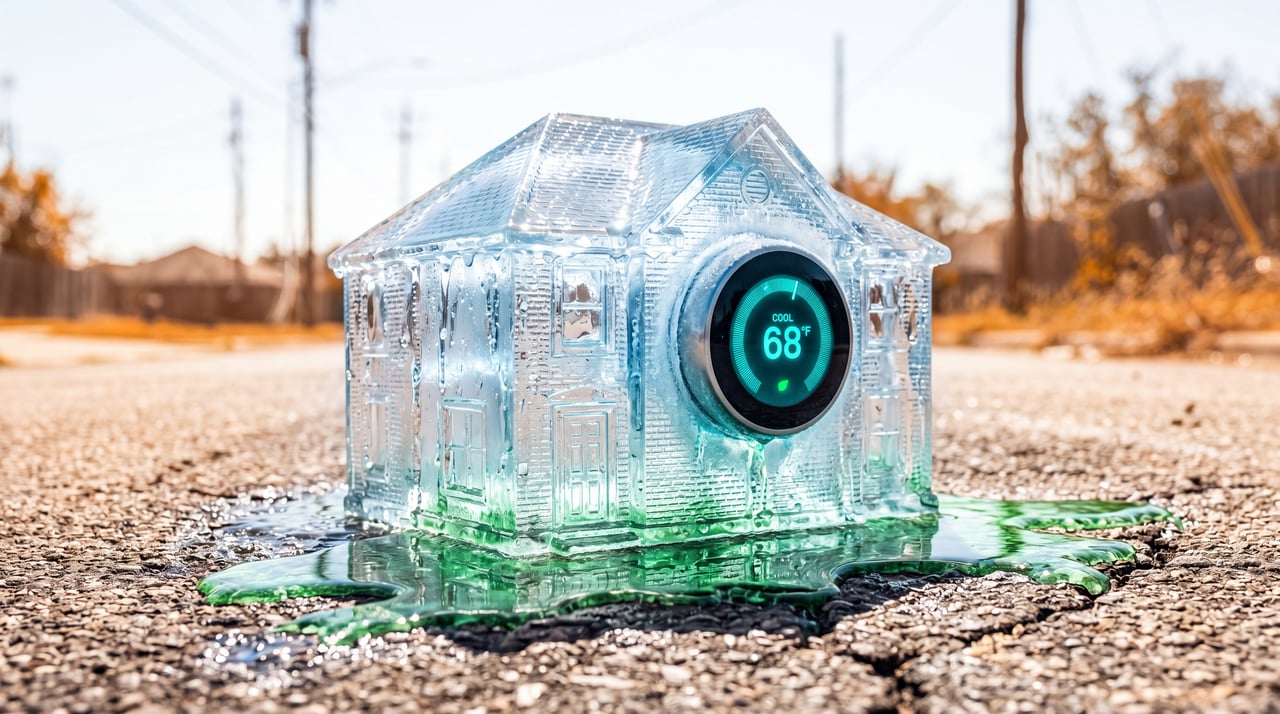
If you make one hardware purchase, make it this one. A quality smart thermostat runs $130 to $250 and typically trims 8% to 15% off cooling costs by learning your schedule, easing back when the house is empty, and avoiding the all-day overcooling that drives Houston bills. CenterPoint's program currently offers around $75 back on a qualifying unit, which shrinks the payback period to a single summer for many homes.
It also reads well to buyers. Smart thermostats consistently rank among the highest-appeal, lowest-cost smart features in buyer surveys, and they photograph and demo well at showings. For the price, nothing else on this list combines bill savings and buyer appeal so efficiently.
HVAC: The Big One, and the One With a Rebate
When an aging system finally needs replacing, this is where the largest summer savings live, and where Houston's specific climate should drive the spec. The code-minimum efficiency rating is not enough here. For Gulf Coast humidity, look for SEER2 16 or higher with a variable-speed compressor, which controls moisture far better than a baseline unit and keeps the house comfortable at a higher thermostat setting.
The numbers support treating this as an investment rather than a grudge purchase. A modern HVAC system recovers roughly 71% of its cost at resale, often outperforming cosmetic remodels, and a documented new system can lift a home's perceived value and shorten its time on market. CenterPoint's Standard Offer Program still pays around $500 per qualifying heat pump unit, plus the thermostat rebate, which softens the upfront cost now that the federal credit is gone. If your system is limping through summers with frequent repairs, replacing it before you list lets you capture both the comfort and the resale credit yourself.
Windows, Doors, and the Curb-Appeal Bonus
Window replacement is a real efficiency upgrade and a real expense. Swapping single-pane or failing windows for high-performance units cuts heat gain and recovers about 70% of its cost at resale, but the total bill can climb past $20,000 for a full house, so prioritize the sun-facing rooms if you cannot do all of them at once.
Doors are the sleeper. A new steel or fiberglass entry door costs around $2,000 to $2,500, improves the seal against summer heat, and ranks among the highest-ROI projects in the country, frequently recovering well over 100% of its cost because it transforms curb appeal and security at the same time. It is a small line item that does double duty on a bill and on a first impression.
A Smart Sequence for Houston Homeowners
You do not have to do everything at once, and you should not. Order matters, because a sealed, well-insulated home needs less cooling, which means a smaller and cheaper AC when the time comes.
A sensible Houston sequence: first, shop your electricity rate and lock a fixed plan. Second, add a smart thermostat and claim the CenterPoint rebate. Third, air seal and top off attic insulation, adding a radiant barrier. Fourth, when the HVAC is near end of life, replace it with a SEER2 16+ system and claim the unit rebate. Fifth, address sun-facing windows and the entry door as budget allows. Treat solar as a separate analysis, because in Houston's deregulated market many retail plans pay low export rates for the power you send back, which changes the payback math now that the federal solar credit has expired.
The Resale Angle: What Buyers Actually Pay For
Houston has shifted toward a more balanced market with more homes to choose from and more room to negotiate. In that environment, operating cost becomes a differentiator. Buyers comparing two similar homes increasingly favor the one with a documented efficient HVAC, updated insulation, and a recent energy bill that does not make them flinch.
The practical move for sellers is documentation. Keep the receipts, the SEER2 rating, the insulation R-value, and a few months of utility bills. When a buyer can see that the home runs lean through a Houston August, that becomes a quiet but persuasive part of your listing. If selling is on your horizon, these upgrades belong in the same conversation as staging and pricing. For more on maximizing your sale, see our guides on how to increase your Houston home's value before selling and selling your Houston home for top dollar.
Energy costs are also part of the bigger affordability picture buyers weigh. Utilities sit alongside property taxes and insurance in the true monthly cost of a Houston home, a topic covered in our Houston cost of living guide and Houston property taxes breakdown. And if your AC is the upgrade you are weighing, our room-by-room home tour checklist shows exactly what buyers and inspectors look for in a Houston system.
The Bottom Line
The era of the IRS subsidizing your efficiency upgrades ended in 2025. That does not change the underlying logic for a Houston homeowner; it sharpens it. The savings are still here, they just come from a lower bill, the CenterPoint rebates that remain, and the premium a future buyer will pay for a home that survives a Texas summer without punishing them. Start with the free move, work up the list as your budget allows, and keep the paperwork. Your August bill and your eventual sale price will both thank you.
If you are weighing which upgrades make sense before listing, or want a read on what today's Houston buyers are paying for, reach out. Raquel Refuerzo has worked Houston real estate since 2013, with an investor's eye for where a dollar of improvement turns into more than a dollar at closing. Call or text 832-415-9228, or visit realtyraquel.com.
Related Keywords:
lower energy bills Houston, energy efficient home Texas, reduce electric bill Houston summer, home upgrades resale value, Houston home maintenance summer