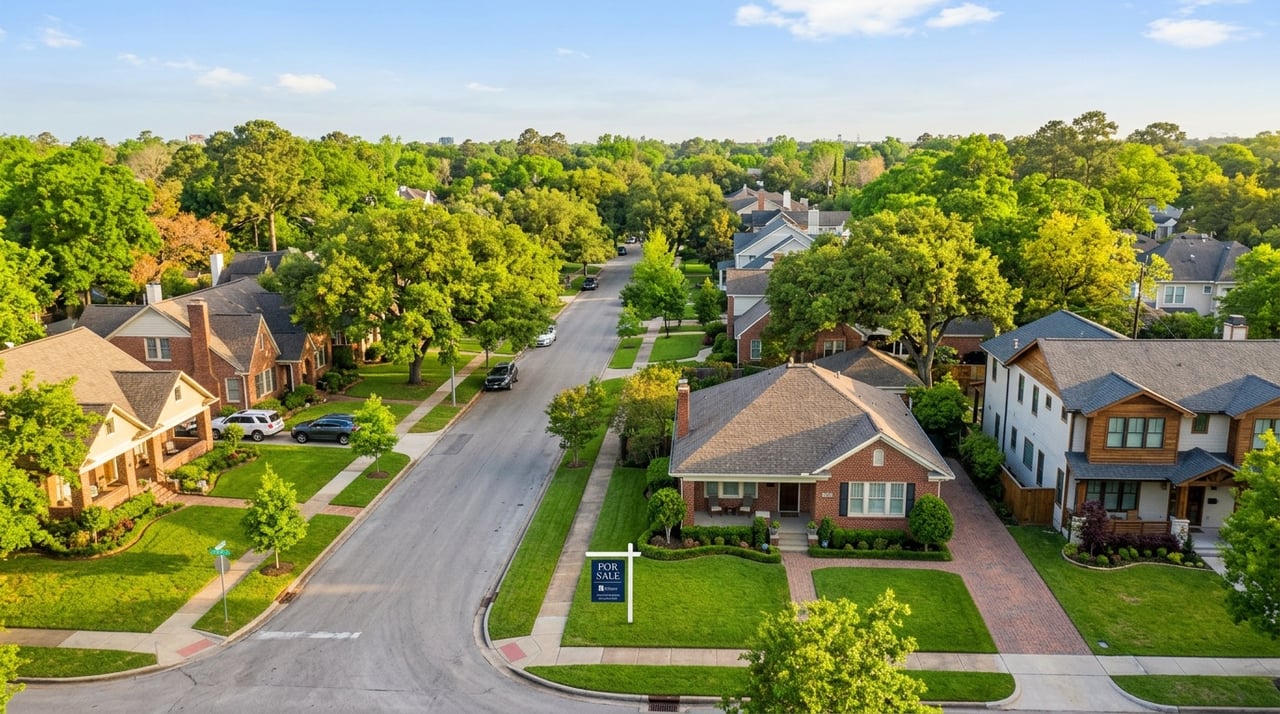
The 5 Houston Inner-City Neighborhoods Where Homes Rarely Sell
Here's what the numbers reveal about these overlooked inner-loop markets
Published: June 16, 2026 | By Raquel Refuerzo
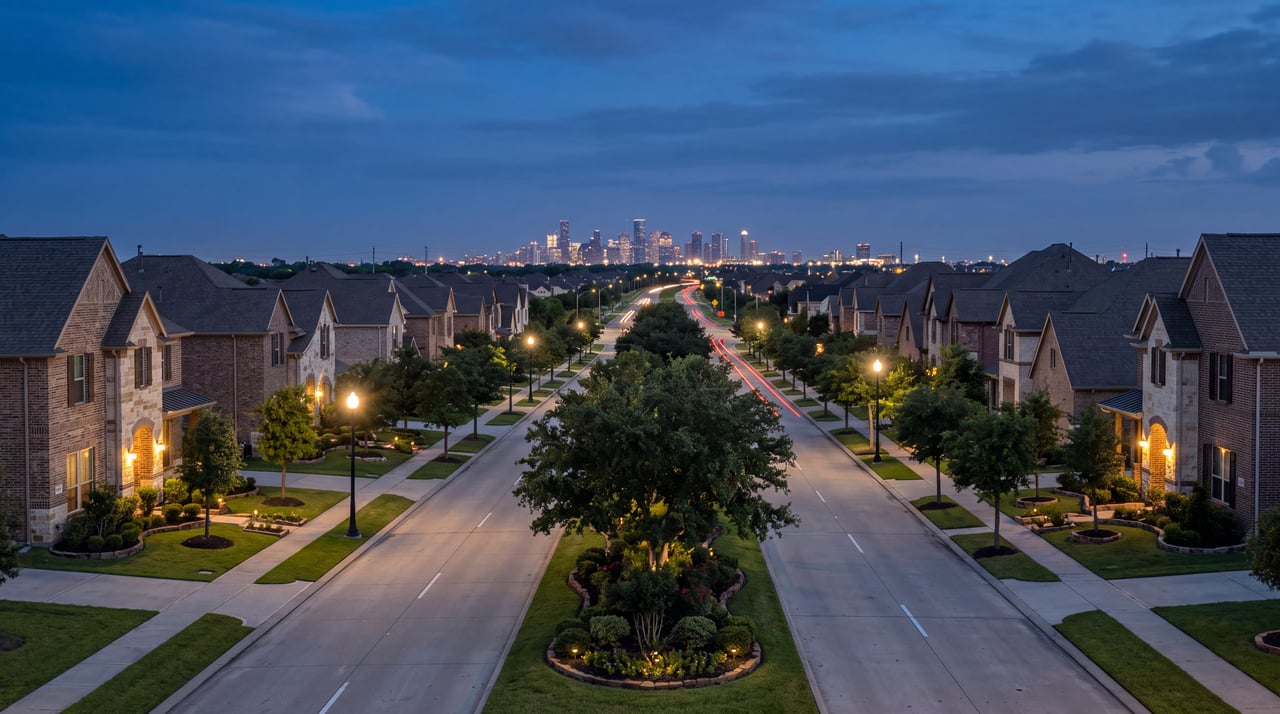
Most of the conversation about Houston real estate focuses on what's moving fast. What zip codes are hot. Which suburbs are absorbing all the new buyers. But there's a quieter story happening inside the 610 Loop, and if you're a buyer, a seller, or an investor, it's worth paying attention.
Some inner-city neighborhoods in Houston barely trade hands from year to year. Not because people don't want in, but because the people who are already in have no reason to leave. Low annual sales volume. Long average ownership tenures. Tiny home counts. These are the markets where patience is a strategy, and waiting for the right listing is simply the cost of admission.
Here's a look at five of those neighborhoods, what the numbers tell us, and what it means for you.
Quick Takeaways
- Several Houston inner-loop neighborhoods post fewer than 50 home sales per year, with some recording well under 30
- Tight deed restrictions and limited lot counts are the primary drivers of low turnover in these areas
- Long ownership tenure means sellers hold strong pricing power when homes do become available
- Buyers need to be pre-approved, decisive, and working with an agent who has direct knowledge of these micro-markets
- These neighborhoods consistently outperform the broader Houston market in long-term price appreciation
What Makes a Neighborhood "Low Turnover" in Houston?
Houston's overall housing market is one of the most active in the country. The metro processes tens of thousands of single-family home transactions annually. So when a neighborhood inside the Loop records fewer than 40 sales in a full calendar year, that's not a slow stretch. That's a structural trait.
Low-turnover inner-loop neighborhoods share a few common characteristics. First, they're small. We're talking about communities with somewhere between 300 and 1,100 total homes. When the total home count is that limited, even a healthy turnover percentage produces a small absolute number of annual sales.
Second, these neighborhoods are typically deed-restricted, with active homeowners associations that enforce architectural standards, lot usage, and other covenants that keep the character of the area stable over decades. That stability is exactly what attracts long-term owners. And long-term owners don't sell often.
Third, these areas tend to sit at the higher end of the inner-loop price spectrum. When your home is worth $1.5 million to $4 million or more, you don't trade up casually. You stay until a life event forces the decision.
The result is a category of Houston neighborhoods where supply is genuinely scarce, not just seasonally tight. Below are five of the clearest examples.
1. River Oaks: Houston's Most Prestigious Address Has Fewer Than 50 Sales Per Year
River Oaks is the most well-known name in Houston luxury real estate, and it consistently ranks among the lowest-volume inner-loop markets. With roughly 1,200 homes in the neighborhood, and a median sale price around $2.2 million, this is not a market where people browse casually.
Why Sellers Stay
Homeowners in River Oaks tend to have deep roots. Many properties have traded within the same family for multiple generations. The combination of prestige, central location, mature oak canopy, and appreciation history makes the neighborhood a long-term hold by default. River Oaks home values have appreciated roughly 53% over the past decade, according to Redfin data, which removes most of the financial motivation to exit.
What Buyers Face
In a typical year, River Oaks records somewhere in the range of 40 to 60 closed sales of single-family homes. In Q1 of 2024 alone, the River Oaks area (including Tall Timbers, Homewood, Royden Oaks, Avalon Place, and Glendower Court) saw only 24 sales, according to HAR MLS data. Buyers should expect homes to sit on market longer than the Houston average, because sellers here are not under pressure. Average days on market in River Oaks typically run above 50 days, and that figure can spike significantly for estate-level properties. Pre-approval at the appropriate price tier is essential before you tour anything here.
2. Avalon Place: 300 Homes, Near-Zero Inventory, Maximum Prestige
Avalon Place is a small, deed-restricted enclave inside the 77019 zip code, bordered by Westheimer Road to the north, San Felipe Street to the south, Dickey Place to the east, and Bellmead Street to the west. With a total count of approximately 300 homes, Avalon Place is one of the smallest residential communities inside the Loop.
A Neighborhood Built for Long-Term Living
The neighborhood has a history stretching back to the late 19th century, and it shows in the ownership culture. Broad, tree-lined streets, large front lawns, and strict deed restrictions governed by the Avalon Property Owners Association create an environment that rewards staying. The APOA, established in 1979, actively enforces covenants that maintain the neighborhood's character. That consistency is a major reason why owners don't leave.
The Numbers in Practice
With only 300 homes total, even a 5% annual turnover rate would produce just 15 sales per year. In practice, annual sales volume in Avalon Place runs well below 20 transactions. Buyers competing for listings here are often making decisions quickly with limited comparable data, since so few homes sell that a "comp" from two or three years ago is the closest benchmark available. If you're interested in Avalon Place, the strategy is simple: get connected with an agent before a listing hits public view.
3. Afton Oaks: 525 Homes With a Civic Club That Keeps Things Quiet
Afton Oaks sits just west of River Oaks, bounded by Westheimer Road, US-59, Loop 610, and the Union Pacific railroad tracks. The neighborhood contains approximately 525 homes, all of which fall under the jurisdiction of the Afton Oaks Civic Club, founded in 1955. The civic club enforces deed restrictions, maintains common areas, and operates neighborhood security patrols.
Why the Structure Matters for Turnover
Deed restriction enforcement in Afton Oaks is active, not passive. That means architectural integrity, lot standards, and use restrictions are consistently applied. For owners, that translates into confidence that their investment is protected by the character of the surrounding properties. That confidence reduces the urgency to exit.
Pricing and Sales Volume
Afton Oaks sits inside the 77027 zip code, one of the more expensive in the inner loop. Homes here are a mix of renovated mid-century ranch homes and newer custom estates. Annual sales volume in the Royden Oaks and Afton Oaks combined area typically runs in the range of 20 to 35 transactions per year, depending on the market cycle. Price appreciation in Afton Oaks and River Oaks combined was up roughly 19% year-over-year as of early 2025, according to Redfin data. That price momentum is another reason owners hold.
| Neighborhood | Approx. Total Homes | Est. Annual Sales | Median Price Range | Avg. Days on Market |
|---|---|---|---|---|
| River Oaks | ~1,200 | 40–60 | $2M+ | 50–90 days |
| Avalon Place | ~300 | Under 20 | $1.5M–$3M+ | 60–100 days |
| Afton Oaks | ~525 | 20–35 | $800K–$2M+ | 45–80 days |
| Tanglewood | ~1,000+ | 40–55 | $1.5M+ | 90–120 days |
| West University Place | ~3,800 | 150–200 | $1M–$2M+ | 30–60 days |
Data sourced from HAR MLS, Redfin, and HoustonProperties.com. Figures reflect general market trends and are not a guarantee of current conditions.
4. Tanglewood: Mature Trees, Large Lots, and a 118-Day Average on Market
Tanglewood is one of the most recognizable names in inner-loop Houston real estate. Developed in the 1950s by William Giddings Farrington and designed with John F. Staub's architectural influence, the neighborhood is known for its sprawling, wooded lots and a mix of Ranch, Mediterranean, and Georgian-style homes. The community contains over 1,000 homes, making it larger than some of the other neighborhoods on this list, but turnover remains low relative to its size.
A Market That Moves Slowly by Design
Current data from Houston Properties shows Tanglewood homes selling at a median price of $1,555,000, with an average of 118 days on market. That extended time-on-market is not a sign of weakness. It reflects a seller base that is not under pressure, priced at a level where the buyer pool is selective, and operating in a market where the right buyer takes time to find the right home.
Pending sales in Tanglewood have trended down in recent months, and price reductions have moderated as well. The math here points to a market with limited near-term inventory and buyers who are being patient. For sellers, that means proper pricing discipline matters enormously. For buyers, it means opportunity exists if you're willing to stay engaged over a longer timeline.
The Investment Case
Tanglewood's average home size runs around 5,491 square feet, sitting on an average lot of more than 21,000 square feet. In 2024, 47 homes sold in Tanglewood at an average of $452.76 per square foot, a 7.3% increase over 2023. That appreciation, on large assets in a deed-restricted community with no new construction land, is a compelling long-term hold argument.
Why Do Houston Homeowners in These Neighborhoods Stay So Long?
The short answer is: the math rarely works in favor of leaving.
The Lock-In Effect Is Real
Owners in these neighborhoods have often held their homes long enough to see meaningful appreciation. When your acquisition price was $600,000 and your home is now worth $2.5 million, the decision to sell triggers a significant tax event, relocation costs, and the near-impossible task of buying back into a comparable neighborhood at current prices. Many owners simply conclude that the costs of leaving outweigh any motivation to move.
Deed Restrictions Create a Self-Reinforcing Community
Tight deed restrictions keep these neighborhoods consistent. The neighbor two doors down isn't allowed to convert their front yard into a parking lot or add a detached accessory dwelling unit without going through a process. That predictability is a real quality-of-life asset. Owners who value it tend to stay, which reinforces the neighborhood's character further.
The Broader Houston Inner-Loop Dynamic
Research from the Kinder Institute for Urban Research at Rice University shows that most new home construction in Harris County has migrated well beyond Beltway 8. As of 2023, 63% of new home sales in the county occurred outside Beltway 8. That means inner-loop homeowners who want to stay inside the Loop have no "move up" new construction option. They stay in place or pay a significant premium for resale inventory.
For buyers, the implication is direct: these neighborhoods are not going to open up simply because broader Houston inventory is rising. Inner-loop supply constraints are structural, not cyclical. The Houston inner-loop as a whole commands price premiums of $280 to $565 per square foot compared to suburban options in the $135 to $220 range.
What This Means for Buyers and Sellers in 2026
If you're a buyer targeting one of these five neighborhoods, here's the practical reality. You need to be in a position to move quickly when the right listing appears. That means pre-approval is not a suggestion, it's a prerequisite. It also means your agent needs to have relationships in these micro-markets, not just access to the MLS. Many desirable properties in River Oaks and similar communities trade before they ever appear publicly.
If you're a seller in one of these neighborhoods, you're holding an asset with genuine scarcity value. The Houston housing market in 2026 is showing broader inventory increases across the metro, but that trend does not apply uniformly inside the Loop. Buyers who want your specific neighborhood have no substitute option. Pricing your home correctly to the current market is the key variable. Overpricing in a low-volume market does not attract traffic the way it might in a high-turnover suburb. You need a pricing strategy built on real comparable data from a short window of similar sales.
For investors, these five neighborhoods represent some of the most durable long-term holds in the Houston market. The combination of deed-restriction-protected character, limited new construction, and established buyer demand creates the conditions for steady appreciation over a 10-year horizon.
If you're thinking about buying or selling in any of these inner-loop neighborhoods, Raquel Refuerzo brings over a decade of Houston market expertise and direct experience with these low-inventory, high-stakes markets. The right move in a neighborhood like this is rarely obvious from the outside. Let's talk about what the numbers look like for your specific situation.
Have you ever tried to buy into one of these neighborhoods? What was your experience? Drop a comment or reach out directly.
Related Keywords: Houston inner loop neighborhoods, homes rarely sell Houston, low turnover Houston real estate, River Oaks homes for sale, Avalon Place Houston real estate, Afton Oaks homes Houston, Tanglewood Houston homes, West University Place real estate, inner loop Houston market 2026, Houston luxury neighborhoods low inventory, why Houston homeowners don't sell, inner loop Houston appreciation, Houston deed restricted neighborhoods, inner loop Houston buyers guide, Houston real estate investment 2026, best Houston neighborhoods to buy, Houston inner loop home prices, low inventory Houston inner loop, inner loop Houston seller market, Houston luxury real estate trends, scarce Houston home inventory, inner city Houston real estate, 610 loop neighborhoods Houston, Houston homes for sale 77019, Houston prestige neighborhoods