Priced to Sit: Why Houston Homes Are Getting Delisted in 2026
How to price competitively, avoid stale-listing syndrome, and actually sell in a higher-inventory market.
July 14, 2026 | Raquel Refuerzo
There is a quiet trend playing out across Houston listings this summer, and it has nothing to do with homes selling. It is homes disappearing. Not because they closed, but because their owners gave up and pulled them off the market. The polite industry term is "delisting." The honest version is that the price was wrong, the home sat, and the seller blinked.
If you are thinking about selling in 2026, this is the single most important pattern to understand. The market still rewards sellers who price to reality. It quietly punishes everyone who prices to memory.
Quick Takeaways
- Nationally, 5.8% of home listings were pulled off the market in April 2026, the highest share since March 2020, with Texas and Florida metros leading the country.
- Greater Houston homes spent an average of 54 days on market in May 2026, up from 51 a year earlier, and topped 66 days back in January, the slowest pace in nearly six years.
- Roughly 30% of active Houston listings have taken a price cut, which is lower than Dallas and Austin but still a clear signal that overpricing has consequences.
- Demand is not gone. Pending sales hit their strongest level since 2022 in May. Buyers are active, patient, and ruthless about value.
- The fix is not delisting and relisting later. It is pricing correctly on day one and capturing the attention window while it is open.
The Delisting Wave Is Real, and Texas Is Leading It
Let us start with the national picture, because Houston is not an island. According to Redfin, nationwide, 5.8% of all U.S. home listings were taken off the market in April. That is tied with December 2025 for the highest share since March 2020, when the onset of the pandemic ground the housing market to a halt. Delistings rose 3.8% month over month on a seasonally adjusted basis, the second straight month in which they increased.
Here is the part that matters for us. Florida and Texas metros led the nation in delistings as high mortgage rates and affordability challenges continued to dampen demand. Dallas posted a 7.8% delisting rate, among the highest of any major metro in the country.
The reason is not complicated. Delistings are on the rise largely because it is a buyer's market. Many homeowners want to sell, but only if they can get the price they want. In many cases, prospective sellers test the waters but pull their home off the market when they do not get the price or terms that make selling worth it. In plain English: sellers list at a 2022 number, the offers do not come, and rather than adjust, they yank the sign out of the yard.
The Relisting Trap Nobody Mentions
Delisting feels like a clean reset. It is not. 2.5% of homes currently on the market are relistings that had previously been withdrawn, the highest share on record. That suggests many sellers are testing the market, pulling listings when demand disappoints, and returning later in hopes of more favorable conditions.
The problem is that the market remembers. Sophisticated buyers and their agents can see listing history. A home that vanished and reappeared reads as a property with a problem, even when the only problem was the price. You do not get a clean slate. You get a question mark.
What "Priced to Sit" Actually Means in Houston
Houston is healthier than Dallas or Austin, but the same gravity applies. The defining metric of 2026 is time. Homes spent more time on the market, with days on market rising from 51 days a year ago to 54. Active listings increased to 37,619 available homes, while months of inventory held at 5.1.
Rewind to the start of the year and the shift is even starker. According to the January 2026 HAR report, single-family homes in the Greater Houston area spent an average of 66 days on the market before selling, the highest days-on-market average in nearly six years, signaling a major shift in the power dynamic between buyers and sellers.
And the price-cut data tells you exactly who is sitting and who is selling. Approximately 30 percent of active listings in Houston experienced price reductions, compared to higher percentages in Dallas and Austin. This suggests that realistic pricing from the start gives sellers a significant advantage.
Read that again. Three in ten Houston listings have already cut their price. Most of those cuts happened because the home sat first, lost momentum, and forced the seller's hand. A correct list price would have skipped that entire detour. As HoustonProperties puts it bluntly, days on market is the leading indicator of future price reductions, and price reductions are the leading indicator of the final sale price. The sitting comes first. Everything bad follows from it.
Demand Is Not the Problem
Before you panic, understand what this market is not. It is not a market without buyers. Pending sales of single-family homes climbed 5.8% year over year to 9,172 in May 2026, marking the strongest level of contract activity since May 2022.
Buyers are out there in force. They are just selective. For sellers, the days of multiple offers within hours are largely over. Buyers can now take time to compare properties, negotiate terms, and request repairs. However, this does not mean homes are not selling. Priced-right properties still move. The line between selling and sitting is almost entirely about the number you put on it.
The Stale-Listing Death Spiral
Here is the mechanism that turns an overpriced listing into a delisting, step by step.
You list high, betting a buyer will fall in love and overpay. In week one, your home gets its biggest burst of attention, because every active buyer and every saved-search alert sees it as new. They look, they compare, they pass on the price. By week two, the new-listing buzz is gone. By week four, your days-on-market counter is climbing, and buyers start assuming something is wrong with the house. By week six, you cut the price, but now you are negotiating from weakness against a listing that already looks tired. By week eight or ten, frustrated, you delist.
Compare that to the home that listed at the right number. It captured the week-one attention with a price buyers respected, drew competing interest, and went under contract before the stale clock ever started. Same house, same neighborhood, wildly different outcome, all decided by the list price.
The cruel irony is that overpricing to "leave room to negotiate" usually nets you less than pricing right, because time on market erodes your leverage faster than any lowball offer ever could. Sellers who cling to peak-era strategies of overpricing and refusing concessions are the ones who watch their homes sit. Sellers who price strategically and prepare their homes well are still closing at strong prices.
Priced Right vs. Priced to Sit
Factor | Priced Right From Day One | Priced to Sit |
|---|---|---|
Week-one traffic | High, captures every active buyer | High, but buyers pass on price |
Days on market | Often under 30 in the inner loop | 60, 90, or more |
Buyer perception | Fresh, competitive, fairly valued | "What is wrong with it?" |
Price cuts | Rare or none | One or more, from a position of weakness |
Negotiating leverage | Strong, multiple-interest potential | Weak, buyer holds the cards |
Likely endgame | Contract near asking | Delist, relist, or sell below where it should have started |
Why Delisting Is Not the Reset You Think It Is
The temptation is real. Pull the listing, take a break, relaunch in a few months with fresh photos and a new days-on-market count. Some sellers are even leaning on the "coming soon" approach to build buzz before going live. A recent Redfin survey found that more than 80% of prospective sellers are interested in a coming-soon approach to listing their home, which can reduce the risk of a listing going stale.
Coming-soon and pre-marketing can genuinely help, when used as a launch strategy. But delisting after the fact to dodge a stale label is a different animal. You carry the property longer, you pay more in taxes, insurance, and mortgage while you wait, and you bet on a future market that may not be friendlier than today's. Meanwhile, the buyers who would have bought this summer move on to other homes.
If the price was the problem, a relist does not fix it. Only a correct price does.
How to Price So You Do Not Sit
This is where strategy beats hope. A sound Houston home pricing strategy in 2026 looks like this.
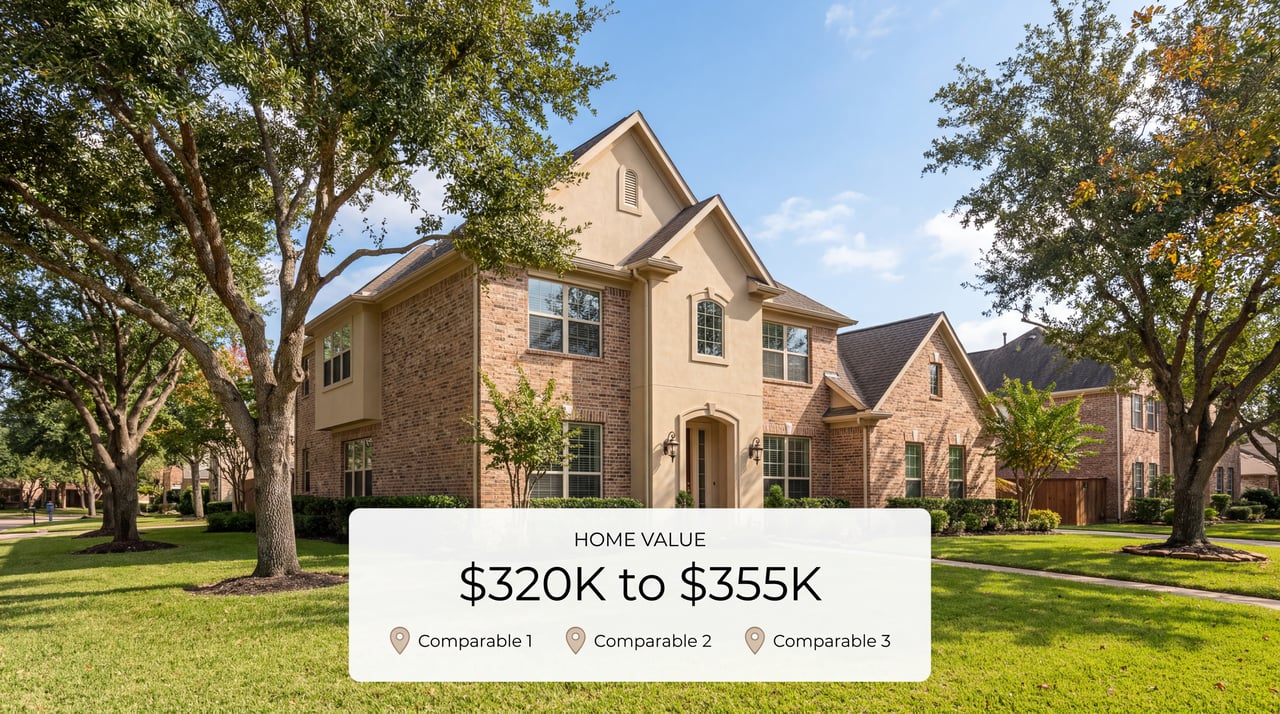
Start with real comps, not your neighbor's asking price. Asking prices are wishes. Closed sales are facts. A proper comparative market analysis built on recent closings in your specific submarket and price tier is the foundation of every smart list price.
Price into the buyer's search bracket. Buyers shop in round-number ranges. Listing at $415,000 buries you below every buyer searching the $400,000 ceiling. Listing at $399,900 puts you in front of two audiences at once.
Respect the first two weeks. That window is your single biggest pool of attention. Price to win it, not to test it. You can always entertain a strong offer. You cannot get week one back.
Prepare the product. Price and presentation work together. Smart staging, professional listing photos, and the right pre-sale improvements justify your number and shorten your days on market.
Set expectations early. Sellers should expect to negotiate on price, make repairs, and wait 60 to 90 days for the right buyer. Knowing that going in keeps you from panicking at day 30 and making a reactive cut.
The Houston Nuance: Inner Loop vs. Suburbs
Not all of Houston sits at the same speed, and where your home is matters as much as how you price it. Inner-loop neighborhoods like The Heights, Montrose, and West University are performing meaningfully better than the suburban periphery, where new construction inventory has accumulated. Well-priced homes in The Heights, Montrose, and similar inner-loop neighborhoods are selling faster, often under 30 days.
Out in the suburbs, the math changes. Homes that do not reflect today's reality are sitting, sometimes for 90 days or more before taking a price cut that a correct initial list price would have avoided entirely. If you are competing against builders offering rate buydowns and incentives on brand-new inventory, your resale home has to be priced and presented to win on value, not nostalgia.
This is also why a generic "Zestimate" is dangerous. Hyperlocal pricing, down to the block and the school zone, is the difference between selling and sitting. If you want the broader context, see what every Houston seller needs to know and the playbook for selling in a buyer's market.
The Bottom Line
Houston in 2026 is not a market that punishes sellers. It is a market that punishes wishful pricing. The homes getting delisted are not victims of a bad market. They are victims of a bad number, set on day one and defended for too long.
If you want to sell your house in Houston in 2026 without the stale-listing detour, the move is simple to say and harder to do alone: price to the buyer who is actually shopping this summer, not the buyer who showed up in 2022. Get the number right, capture week one, and you sell. Get it wrong, and you join the delisting statistics.
The data is clear, the buyers are real, and the strategy is knowable. Pricing your home correctly the first time is the whole game. If you want a precise read on what your specific home should list for in today's Houston market, that is exactly the conversation worth having before the sign goes in the yard.
Related Keywords: how to price my home Houston, Houston home delisting, sell my house Houston 2026, Houston home pricing strategy, days on market Houston