Why Buying Your First Home in Houston Has Never Cost More
What the new "entry fee" data means for first-time buyers in the Houston market, and what you can do about it right now.
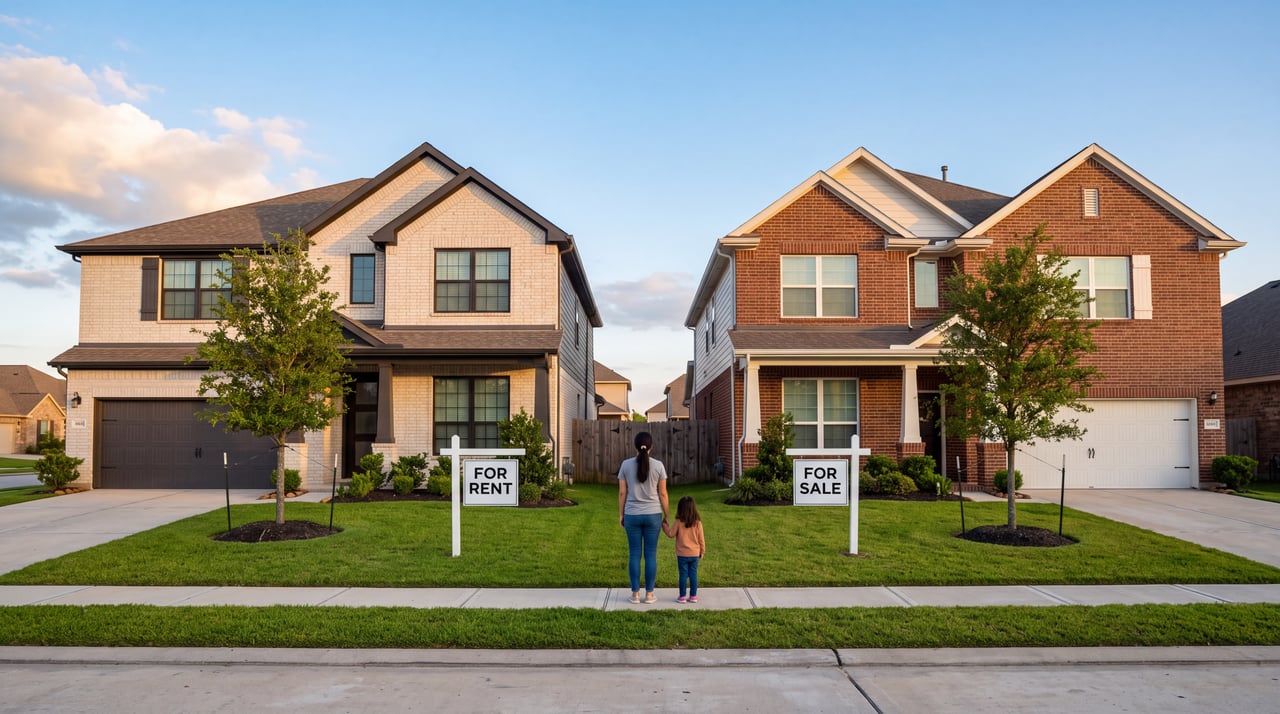
Imagine two neighbors living side by side in the same Houston suburb. Same zip code. Same square footage. Almost the same home. But one of them bought in 2020, and the other is buying today. The neighbor who bought in 2020 pays $1,200 a month. The neighbor buying now? Closer to $2,800. Same neighborhood. Wildly different financial reality.
That gap is not a coincidence. It is the new normal, and it has a name: the homeownership entry fee.
What Is the "Entry Fee" and Why Is It at a Record High?
A new study by the Economic Innovation Group found that the housing market has essentially split into two since the COVID-19 pandemic, mirroring a broader K-shaped economy. On one side are new buyers, paying a record premium to get into the market. On the other are existing homeowners, whose housing costs as a share of income sit at near-record lows.
New data from the U.S. Census Bureau backs this up. Homeowners who moved in 2024 paid a median of $2,225 per month, and adjusting for inflation, they paid $648 more per month than homeowners who last moved five years earlier. That 41% difference was the largest recorded gap since at least 2008.
The driving force behind this divide is borrowing costs. Mortgage rates continue to run significantly higher than the pandemic-era lows, pushing monthly payments up, while elevated rents make it harder for would-be buyers to save for a down payment at the same time.
Existing homeowners bought at lower prices and took out smaller mortgages. Whether they bought when rates were low or refinanced down, their payments are far lower than what today's buyers face. Meanwhile, you are walking in cold, with rates closer to 7%, on a home that costs far more than it did just five years ago.
The result is a widening cost burden that squeezes first-time buyers harder than at any point in recent memory.
A Real Story From the Houston Market
Maria came to me last spring ready to buy her first home. She had a strong credit score, a solid savings account, and a stable job in the Texas Medical Center. On paper, she was the ideal buyer.
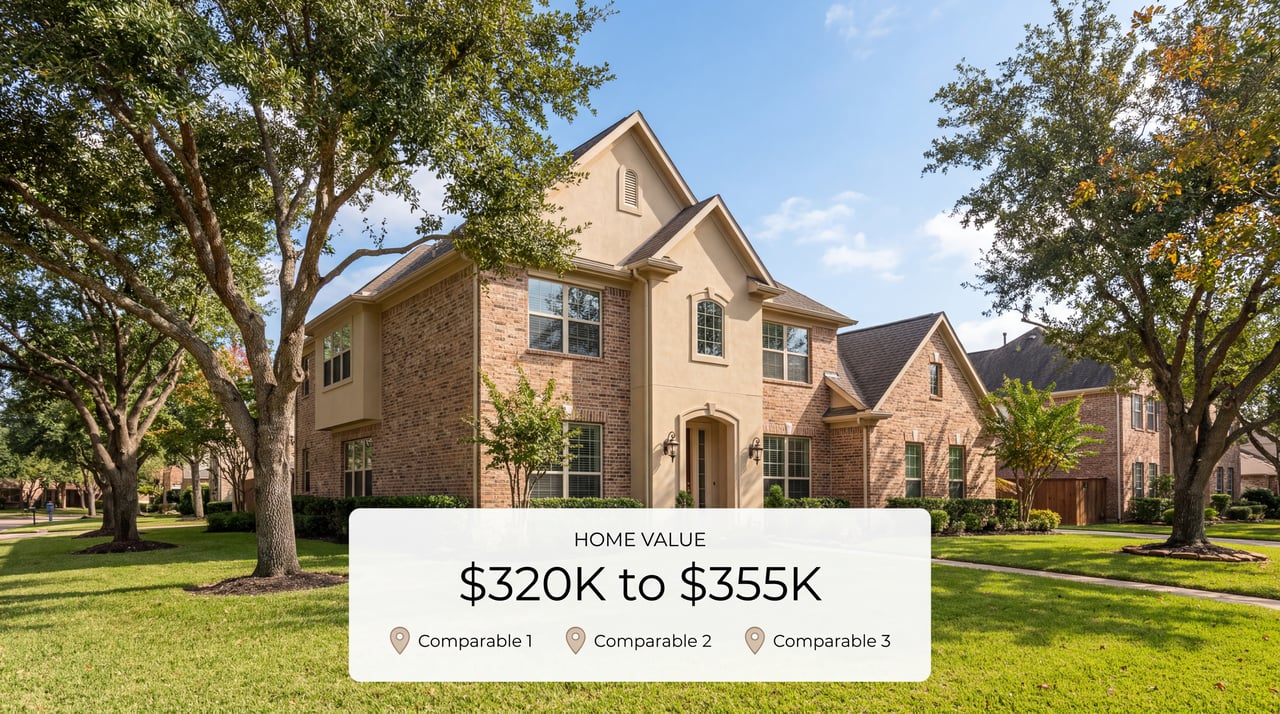
When we ran the numbers on a $320,000 home in the Katy area, including principal, interest, property taxes, homeowners insurance, and PMI (since she planned to put 5% down), her estimated monthly payment landed around $2,600. She had been renting a two-bedroom apartment for $1,450.
The jump was real. But so was her goal. We worked through the options together, identified a down payment assistance program she qualified for, and locked her into a home before prices climbed further in her target neighborhood. Today, her equity is building, and her monthly payment, while higher than rent, is working for her instead of her landlord.
Her story is not unique. It is what the data describes. But it is also proof that the entry fee, while high, is not the end of the story.
What This Looks Like Specifically in Houston
Houston is not immune to national trends, but it does offer some advantages that many markets simply do not have.
The 2025 Houston housing market saw home prices forecast to rise around 3%, keeping the city competitive. Inventory improved, especially in suburbs like Tomball, Hockley, and Porter, but entry-level homes remained limited. Cash buyers and investors stayed active in hotspots like The Heights and Spring Branch.
For first-time buyers, closing costs in Houston typically run 2% to 5% of the purchase price. On a $400,000 home, that amounts to $8,000 to $20,000 in costs beyond your down payment.
Texas also adds a layer that buyers from other states sometimes miss: property taxes. Texas has no state income tax, but property tax bills in Harris County and surrounding areas like Fort Bend and Montgomery County add up fast. Costs vary significantly depending on which suburb you choose, and the difference between Katy and Cypress property taxes alone can run into the thousands annually.
All of this stacks on top of the elevated mortgage rates that are driving the national entry fee to record levels. If you are buying in Houston today, you are managing more financial variables at once than buyers did just a few years ago.
Breaking Down What the Entry Fee Actually Includes
When people hear "entry fee," they often think only about the down payment. The real cost is broader. Here is what new Houston buyers are typically absorbing:
Down payment: Depending on your loan type, this ranges from 0% (VA or USDA loans) to 3.5% for FHA, to 5% to 20% for conventional financing. On a $350,000 home, 5% down is $17,500 out of pocket before closing day.
Closing costs: Expect 2% to 5% of the purchase price in fees covering title insurance, appraisal, lender charges, inspection, and recording fees.
Property taxes: In Harris County, effective property tax rates run higher than the national average. Factor this into your monthly payment estimate from day one.
Homeowners insurance: Insurance premiums have surged nearly 70% since 2021, averaging between $2,802 and $3,548 annually in 2025. In Houston, flood insurance is also a real consideration depending on your neighborhood's FEMA flood zone status.
PMI: If you put down less than 20%, you will carry private mortgage insurance until you reach that equity threshold.
Maintenance reserve: Budget 1% to 2% of your home's value per year for upkeep. In Houston's climate, your AC system and roof will be the biggest line items.
To read more about what to expect specifically at the closing table, check out Raquel's full guide here: Closing Costs for Buyers in Houston: What to Expect
Why the Gap Between New Buyers and Existing Owners Keeps Growing
Even during the peak of the 2007 housing bubble, new owners were spending 28% of their income on housing, but the gap with existing homeowners was only 4 percentage points. The current divide is wider than it was even then.
So what keeps existing homeowners comfortable while new buyers feel the squeeze?
The lock-in effect. The persistent payment gap between existing and new owners keeps existing homeowners from listing their properties. They have little financial incentive to trade a low-rate mortgage for a new one at today's rates. This chokes off supply and maintains upward pressure on prices, creating a cycle of high prices, high rates, low inventory, and low affordability that hurts both first-time buyers and existing owners who would prefer to move.
Experts agree that the only lasting solution is more supply. New construction in in-demand locations is the clearest path forward, but even the economists studying this problem acknowledge it will take time, and the gap is not expected to close soon.
So what does that mean for you as a buyer today? It means waiting is not a guaranteed win. Prices are not expected to drop. Rates are not expected to return to 3%. The entry fee may look different in two years, but it is unlikely to disappear.
This is worth thinking through: if you are renting right now and waiting for the "perfect" time to buy, is that rent money building your equity or someone else's?
Houston Assistance Programs That Can Lower Your Entry Fee
Here is the part that many first-time buyers in Houston miss. There is real help available, and it is worth exploring before you assume you cannot afford to buy.
The City of Houston offers up to $50,000 in homebuyer assistance to income-qualified residents through its Homebuyer Assistance Program. The assistance comes as a no-interest, forgivable loan that is forgiven if you live in the home for five years.
Texas also offers statewide programs including My First Texas Home, which provides a 30-year, low-interest mortgage with up to 5% of the first mortgage amount for down payment and closing costs.
The Mortgage Credit Certificate program gives qualifying homebuyers a federal tax credit of up to 20% of the mortgage interest paid each year, which adds up over time and reduces your effective housing cost.
Want to compare loan options before you decide? Read through Raquel's breakdown here: FHA vs Conventional Loans in Houston: Which Is Better?
FAQ: Entry Fee, Affordability, and Buying in Houston
Is now a good time to buy a home in Houston even with high entry costs?
It depends on your financial situation and how long you plan to stay. If you are buying with a 5 to 7 year horizon or longer, you are likely to build meaningful equity even at today's prices. The bigger risk for most buyers is waiting and watching both prices and rents continue to climb while sitting on the sidelines.
How much income do I need to buy a home in Houston right now?
To afford a median-priced home nationally, a buyer needs to earn around $114,000 annually. Houston's median home price runs below the national median, which gives local buyers a relative advantage, but property taxes and insurance add costs that offset some of that benefit.
What if I do not have 20% down?
You do not need 20% to buy. FHA loans allow as little as 3.5% down. VA and USDA loans allow zero down for qualifying buyers. Conventional loans start at 3%. Down payment assistance programs in Houston and through the state of Texas can help bridge the remaining gap.
Why are Houston property taxes so high compared to other states?
Texas funds its public services through property taxes instead of a state income tax. This is a trade-off that benefits higher-income earners but adds a layer of cost for homeowners. The effective rate in your specific county and school district will affect your monthly payment significantly, which is why comparing neighborhoods matters beyond just the list price. Check out Raquel's Houston Housing Market Update for the latest data on the market.
How to Navigate the Entry Fee Without Waiting Forever
The entry fee is real. No amount of framing changes the fact that buying a home in Houston today costs more, on a monthly basis, than it did five years ago. But the path to ownership still exists, and buyers who prepare strategically are still closing.
Here is where to start:
Get a full picture of your monthly costs before you shop. That means not just the mortgage payment, but property taxes, insurance, and maintenance. Your agent and lender should help you build a realistic number.
Explore every assistance program you qualify for. Many buyers leave money on the table by not asking about city and state programs early enough in the process.
Look at suburbs with inventory. Neighborhoods 20 to 30 minutes outside central Houston, like Cypress, Spring, and Conroe, often offer more house for your budget, and some of those areas are where inventory has improved most.
Do not let the entry fee scare you into renting indefinitely. Rent does not build equity, and Houston rents have been climbing too.
If you want to understand which Houston neighborhoods fit your budget and lifestyle, this is a great place to start: The Best Neighborhoods in Houston for Young Professionals in 2026
Ready to Take the First Step?
If you are thinking about buying your first home in Houston, reach out to Raquel Refuerzo. She knows this market, knows the programs available to you, and will help you figure out what actually makes sense for your situation. No pressure, just straight answers.
Related Keywords
First-time homebuyer Houston, Houston housing market 2026, entry fee homeownership, Houston closing costs, down payment assistance Houston Texas, mortgage rates Houston, Houston first-time buyer programs, City of Houston Homebuyer Assistance Program, affordable homes Houston, Harris County property taxes, FHA loans Houston, homeownership gap existing vs new buyers, Economic Innovation Group housing study, Houston real estate affordability, buying a home in Houston, Houston suburbs for first-time buyers, home buying costs Texas, Houston home prices 2026.