Pros and Cons of Moving to Houston Suburbs vs. Inner Loop
Space vs. commute: a framework for making the right call
Published: May 19, 2026 | By Raquel Refuerzo
Here's the thing about Houston: it doesn't make this decision easy. The metro spans more than 640 square miles, which means the gap between living inside the 610 Loop and setting up in the suburbs isn't just miles on a map. It's a completely different way of living. More space or shorter commute? Character-filled neighborhoods or newer builds with big backyards? The right call depends entirely on what your daily life actually looks like, not on what sounds good in theory.
This post breaks down the real pros and cons of Houston suburbs vs. inner loop living so you can make a data-backed, lifestyle-smart decision before you sign anything.
Quick Takeaways
- Inner loop homes cost significantly more per square foot ($280–$565/sqft) compared to suburban options ($135–$220/sqft), but that gap narrows when you factor in commuting costs.
- Houston-area commuters lose an average of 69 hours per year to traffic congestion, and suburban workers in Fort Bend and Montgomery counties face the worst of it.
- Suburban ISDs (Katy, Cy-Fair, Fort Bend) currently offer more school district stability than HISD, which is still navigating a state takeover.
- Inner loop buyers get faster access to Houston's job centers, culture, and the METRORail Red Line. Suburban buyers get more square footage and newer construction for less per square foot.
- Neither option is objectively better. Your job location, family stage, and lifestyle priorities are the deciding factors.
What Does "Inner Loop" Actually Mean in Houston?
If you're new to Houston, the terminology can be confusing. The "inner loop" refers to the area inside Interstate 610, the ring road that encircles Houston's central core. When you live inside the loop, you're within easy reach of downtown, the Texas Medical Center, major universities, and entertainment corridors like Midtown and the Rice/Museum District.
Neighborhoods like Montrose, The Heights, EaDo, and Rice Military all sit inside the loop. These areas are known for walkability, architectural character, and proximity to Houston's biggest employment centers, which collectively house over 600,000 jobs.
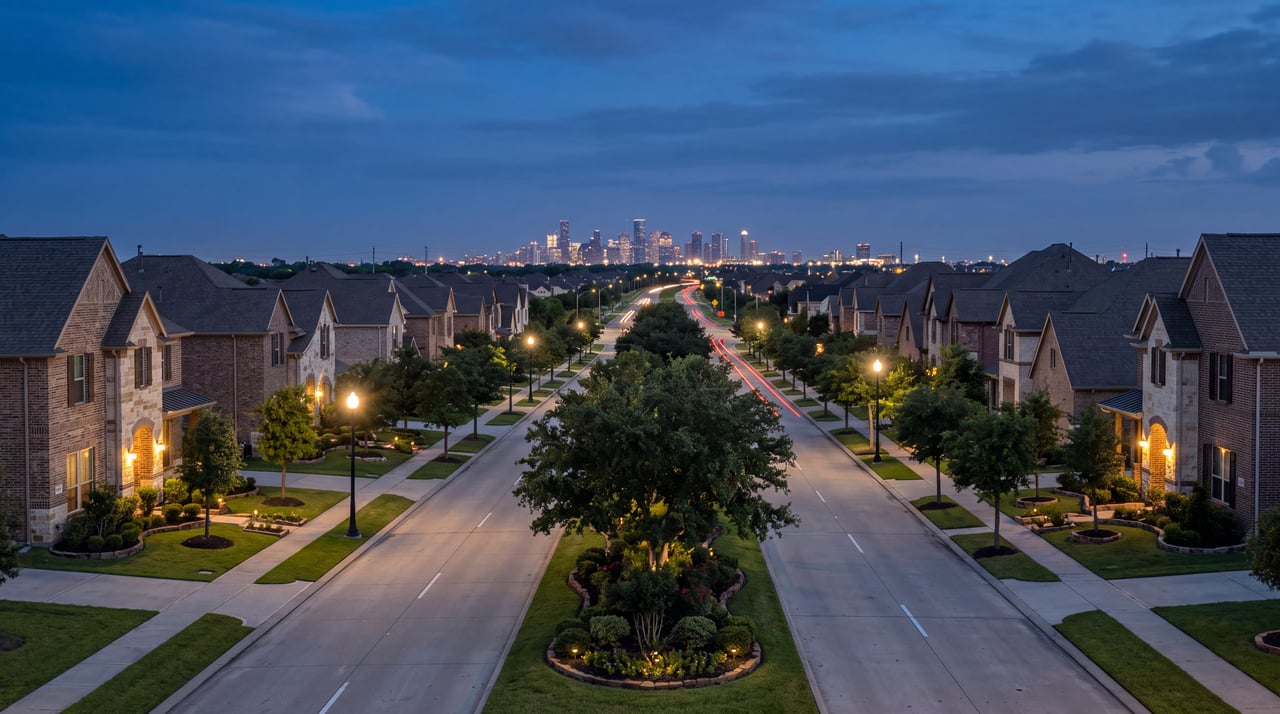
Outside 610, you enter "outer loop" territory, which blends Houston city neighborhoods with surrounding suburbs. Cities like Sugar Land, Katy, Pearland, Cypress, The Woodlands, and Friendswood sit further out and offer a distinctly different lifestyle. Think master-planned communities, larger lots, newer builds, and strong school districts.
The Real Cost Comparison: Inner Loop vs. Suburbs
What are home prices like in the inner loop versus Houston suburbs?
The price gap is significant, and it shows up most clearly in the cost per square foot. Inner loop neighborhoods currently command $280 to $565 per square foot, while suburban areas tend to run $135 to $220 per square foot. The metro-wide median sale price sits around $342,000 as of early 2026, but that number doesn't tell the full story.
Inside the loop, you're paying a location premium. In neighborhoods like Bellaire or West University Place, modest homes carry prices that reflect both location and history. Outside the loop, the same budget buys significantly more square footage, a larger lot, and often newer construction.
Here's a side-by-side snapshot to put it in perspective:
| Factor | Inner Loop | Houston Suburbs |
|---|---|---|
| Median price per sqft | $280–$565 | $135–$220 |
| Typical lot size | Smaller, often townhome or condo | Larger single-family lots |
| Construction age | Mix of historic and new townhomes | Primarily newer builds |
| Monthly tolls (if applicable) | Minimal | $150–$300/month possible |
| School district | HISD (in transition) | Katy, Cy-Fair, Fort Bend, Conroe ISDs |
| Flood risk | Varies by block | Varies, some suburbs better managed |
Don't forget to factor in the true cost of commuting
One of the most overlooked costs when comparing Houston suburbs vs. inner loop is what the commute actually costs you. Suburban commuters who rely on toll roads can spend $150 to $300 per month just in tolls. The Hardy Toll Road from The Woodlands to downtown alone runs roughly $240 per month. Add gas, car maintenance, and time lost, and the price gap between the two options starts to shrink.
The data backs this up. In 2022, the average Houston-area commuter lost 69 hours to traffic delays, costing an estimated $1,645 per person from lost productivity and wasted fuel.
Inner Loop Pros and Cons
What are the advantages of living inside the loop in Houston?
The inner loop's biggest advantage is access. You're closer to work, culture, dining, and entertainment without the freeway grind. For professionals at the Texas Medical Center, downtown law firms, or universities, cutting your commute to 10–15 minutes is worth real money and quality of life.
Inner loop neighborhoods also offer the kind of architectural variety you won't find in a master-planned suburb. Walk through Montrose and you'll see 1920s bungalows next to contemporary townhomes. The character is built over decades, not years.
Transit is also a factor here. The METRO light rail Red Line connects downtown, the Museum District, and the Texas Medical Center, giving inner loop residents public transit options that most suburbs simply don't have.
What are the drawbacks of inner loop living?
The tradeoffs are real. You'll pay more per square foot, and your home will likely be smaller. Many inner loop buyers end up in townhomes or condos rather than traditional single-family homes with yards. If you have kids or dogs, that matters.
HISD, which serves all inner loop homes, is still working through the aftermath of a 2023 state takeover by the Texas Education Agency. By 2026, the district is still navigating leadership turnover and policy shifts. Families prioritizing school district stability are increasingly choosing suburban ISDs with elected boards and consistent leadership.
Redevelopment inside the loop also moves fast. New construction pops up constantly, which refreshes the neighborhood but brings noise, construction traffic, and change. If you like knowing what your block will look like in five years, suburban life offers more predictability.
Suburban Pros and Cons
What are the biggest advantages of Houston suburban living?
Space is the obvious one. For the same budget, suburban buyers typically get more square footage, newer construction, bigger yards, and amenities like community pools and parks. Master-planned communities in Katy, Sugar Land, and The Woodlands are designed around family life, with HOA-run events, walkable school access, and quieter streets.
School district quality is a genuine advantage in the suburbs right now. Districts like Katy ISD, Cy-Fair ISD, and Fort Bend ISD consistently rank among Texas's best for academic performance and district stability. If schools are a top priority in your decision, this factor alone moves the needle significantly.
Some suburbs are also developing their own job centers, which changes the commute equation. The Energy Corridor, The Woodlands, and Clear Lake all offer major employment nodes that mean not every suburban resident is grinding into downtown every day.
What are the downsides of moving to a Houston suburb?
The commute is the biggest one. Workers in Fort Bend and Montgomery counties spend on average 33 to 34 minutes commuting each way, with 52 to 58 percent commuting at least 30 minutes one way. During peak hours, that number climbs higher. Houston ranked fourth in a Forbes study analyzing commute times among the 25 largest U.S. cities.
Suburban living also means limited public transit options. Almost everything requires a car. If you value walkability, being able to grab dinner on foot, or the option of biking to work, most Houston suburbs won't deliver that experience.
Flood risk deserves attention too. While some suburbs manage it well (Sugar Land's levee system protected most homes during Harvey), flooding is a region-wide concern. Always check FEMA flood maps and ask for a home's flood history before you buy. This applies inside the loop as well, since flood risk varies block by block in both locations.
How to Make the Right Call for Your Situation
Houston suburbs vs. inner loop: which is right for you?
The honest answer is that this decision comes down to three things: where you work, what stage of life you're in, and which tradeoffs you're willing to accept.
If you work downtown or in the Medical Center and value your evenings, living inside the loop likely makes financial and lifestyle sense, even at a higher price per square foot. The time you save every week is real.
If you have kids, want top-tier school districts, and need more living space on your budget, the suburbs make a compelling case. The commute is a real cost, but it's a knowable one you can plan around.
A few practical questions worth answering before you decide:
- Where is your office, and what does that commute look like during peak hours? Test it before you commit.
- Do you have children or plan to? School district quality and stability should weigh heavily.
- What's your lifestyle outside of work? If walkability, dining, and urban culture matter daily, the inner loop wins. If weekends are about space, parks, and community, the suburbs deliver.
- What's your full housing budget, including tolls, commute costs, and any HOA fees?
I work with a lot of relocation buyers who come to Houston with assumptions about one or the other, and the best outcomes always happen when we map the actual daily routine first, then match the neighborhood to it. If you want a personalized framework for your specific situation, reach out and we can build it together.
Ready to start your Houston home search? Browse available homes at Home Search Listings or connect with Raquel Refuerzo directly to get neighborhood-specific guidance.
What's your biggest hesitation about the inner loop vs. suburbs decision? Drop a comment below or send a message. It's one of the most common conversations I have with buyers, and there's no one-size answer.
Related Keywords: Houston suburbs vs inner loop, living inside the loop vs suburbs Houston, pros cons moving Houston suburbs, inner loop Houston neighborhoods, Houston suburb home prices, moving to Houston Texas, best Houston suburbs for families, Houston commute times suburbs, Katy TX vs Houston inner loop, Sugar Land vs inner loop Houston, Pearland vs inner loop, Houston housing costs 2026, HISD vs suburban school districts, Cy-Fair ISD Katy ISD comparison, Houston master-planned communities, Houston inner loop real estate, relocating to Houston Texas, Houston home buying guide, inner loop Houston pros cons, best neighborhoods Houston families, Houston suburban living, Houston real estate market 2026, Houston neighborhoods guide, where to live in Houston, Houston home search