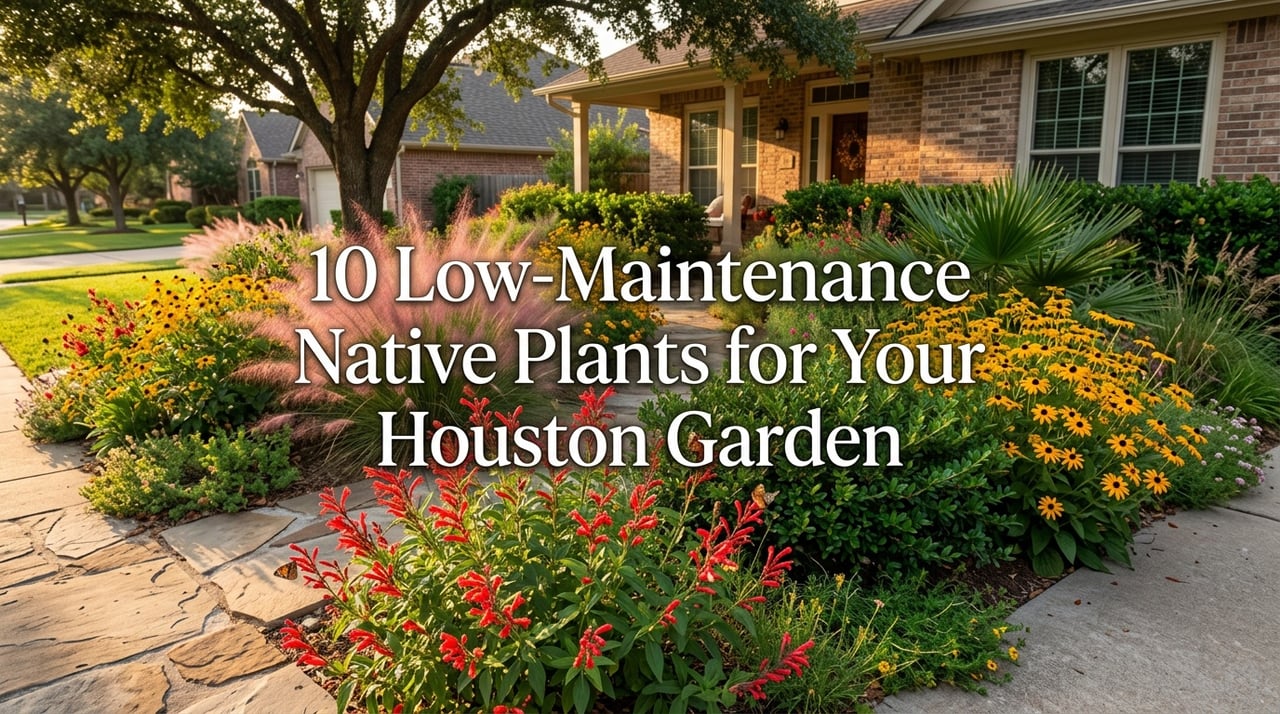
10 Low-Maintenance Native Plants for Your Houston Garden
The Secret Your Yard Has Been Waiting For: Beautiful, Drought-Tolerant Plants That Practically Take Care of Themselves
Imagine pulling into the driveway of your Houston home after a long week, and your front yard looks stunning. No sprinklers running. No weekend hours lost to weeding. No stressed-out plants gasping through August. Just a full, colorful garden that looks like you spent every Saturday out there, when you did not.
That is what native plants do for Houston homeowners. And if you are buying, selling, or already settled into your home here, this is one of the smartest upgrades you can make to your property.
Houston is one of the most unique cities in the country when it comes to climate. The summers are brutal, the humidity is relentless, and drought conditions are becoming more frequent. Most ornamental plants from garden centers struggle here. But native plants? They were born for this.
This blog breaks down 10 of the best low-maintenance, drought-tolerant native plants for Houston gardens, and why adding them to your yard is one of the best decisions you will make as a homeowner.
What Makes a Plant "Native," and Why Should You Care?
The Science Behind Why Native Plants Belong in Your Houston Yard
A plant is considered native if it has grown naturally in a region for thousands of years without human introduction. These plants formed relationships with local wildlife, insects, and soil conditions long before your neighborhood existed.
For Houston gardeners, that means native plants already know how to handle triple-digit heat, heavy clay soil, periods of no rain, and sudden flooding. They do not need fertilizers, constant watering, or special care. They are already tuned to this environment.
That matters for your wallet, your weekend schedule, and your home's curb appeal. If you are thinking about selling your home in the future, a well-maintained, water-efficient yard stands out. Buyers notice. First impressions are everything, and a low-maintenance landscape tells buyers this home has been cared for.
The 10 Best Low-Maintenance, Heat-Tolerant Native Plants for Houston
Your Complete Guide to Drought-Tolerant Plants That Thrive All Year
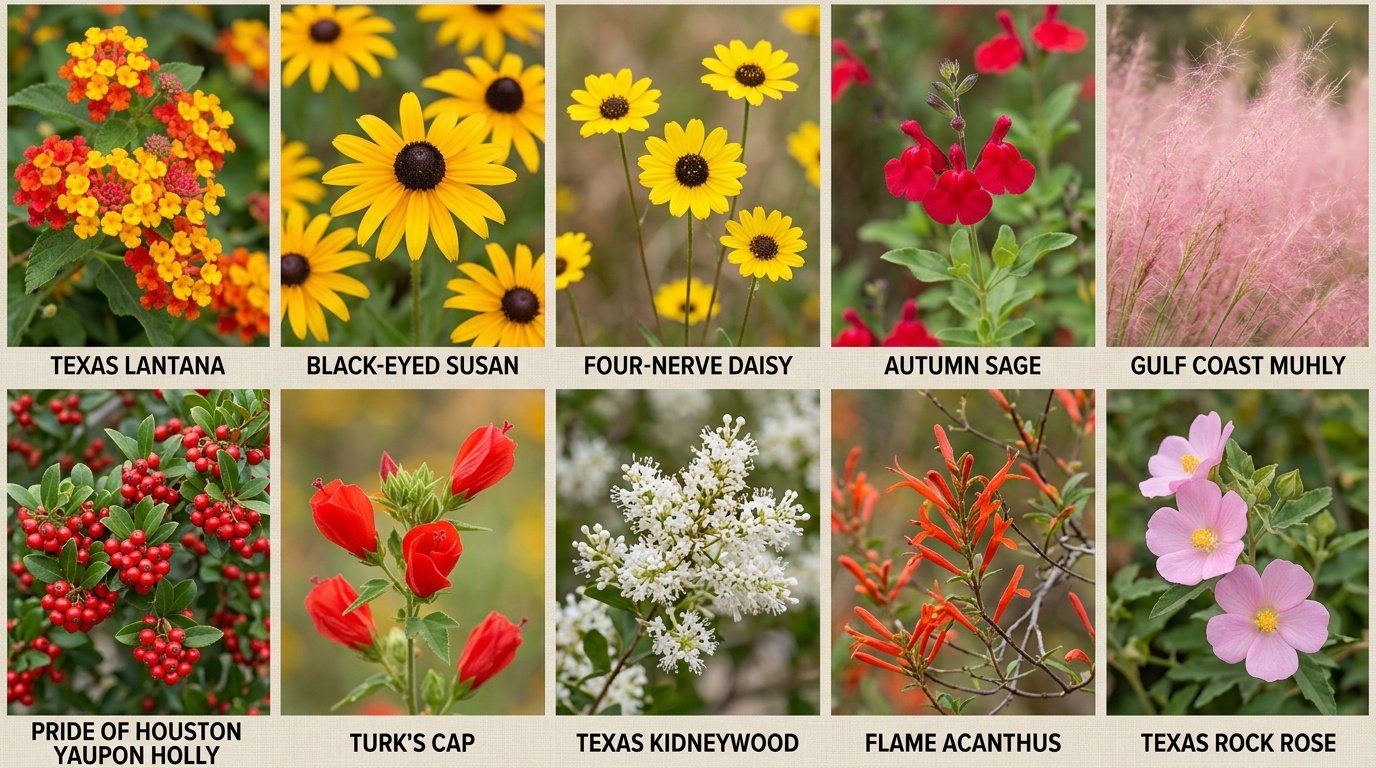
1. Texas Lantana (Lantana urticoides) This spreading shrub produces showy clusters of trumpet flowers that shift from yellow to orange to red as they mature. Texas Lantana grows in a wide range of soils, survives dry spells easily, and attracts butterflies and birds. It is deer-resistant and works well in mass plantings, containers, and border edges.
2. Black-Eyed Susan (Rudbeckia fulgida 'Goldsturm') Few plants give you the visual impact of Black-Eyed Susan. Gold daisy flowers with dark brown centers bloom from mid-summer into fall. It is a low-maintenance perennial that butterflies love, deer tend to leave alone, and pollinators flock to. Cut it back in late fall and it comes back strong every year.
3. Four-Nerve Daisy (Tetraneuris scaposa) Do not let the delicate look fool you. Four-Nerve Daisy is a tough little perennial with bright yellow blooms that reblooms reliably. It thrives in rock gardens and xeriscape designs, handles drought without complaint, and stays compact. Perfect for border edges or filling in between larger plants.
4. Autumn Sage (Salvia greggii) One of the most versatile native plants for Houston gardens, Autumn Sage blooms in red, pink, coral, and white. It is evergreen, deer-resistant, and a favorite of hummingbirds and bees. Plant it in full sun and give it well-drained soil. Beyond that, it largely takes care of itself.
5. Gulf Coast Muhly (Muhlenbergia capillaris) Also called Pink Muhly Grass, this native grass earns its spot every fall when it erupts into a cloud of rosy-pink plumes. It is drought-tolerant, low-water once established, and provides cover for small wildlife. Clean it up in early spring and let it do its thing the rest of the year.
6. Pride of Houston Yaupon Holly (Ilex vomitoria 'Pride of Houston') This upright evergreen shrub produces bright red berries that attract birds and persist through winter. It handles drought well once established, tolerates shade, and works equally well as a hedge, accent plant, or in containers. It is one of the most reliable native shrubs for Houston landscapes.
7. Turk's Cap (Malvaviscus arboreus var. drummondii) Turk's Cap thrives in shade, which sets it apart from most drought-tolerant plants. Scarlet tubular flowers bloom from summer into fall and draw in hummingbirds and butterflies. It spreads over time, filling in shady spots under large trees where little else grows. Cut it back in late fall and it returns strong the following season.
8. Texas Kidneywood (Eysenhardtia texana) A standout for pollinator gardens, Texas Kidneywood blooms intermittently from April through October and carries a faint tangerine scent from its leaves when crushed. It is thornless, drought-hardy, and a larval host for the Dogface Butterfly. Plant it in your backyard and watch the activity it brings.
9. Flame Acanthus (Anisacanthus quadrifidus var. wrightii) Vivid red-orange tubular flowers cover this native shrub from late spring all the way through fall. It handles heavy soils, grows in containers, and is extremely drought-tolerant. Hummingbirds and butterflies are drawn to it consistently. It also works well as a screening hedge along fences or property lines.
10. Texas Rock Rose (Pavonia lasiopetala) Soft rose-pink flowers bloom from spring to fall on this upright native perennial. It thrives in hot, dry areas and works well in rock gardens, general beds, or containers. Prune it lightly after flowering and it rewards you with season after season of low-effort color.
A Quick Story: One Houston Homeowner's Yard Transformation
From Dead Grass to Curb Appeal That Turns Heads
A homeowner in Memorial Park replaced the struggling St. Augustine lawn along their front walkway with a mix of Autumn Sage, Four-Nerve Daisy, and Gulf Coast Muhly Grass. The first summer, they watered twice during a six-week dry spell. That was it.
By fall, the Pink Muhly was putting on a show. Neighbors stopped to ask what it was. One asked where they bought it. Another mentioned it made the whole front of the house look completely different.
That kind of curb appeal is not just satisfying to look at. It adds real value. Whether you are staying for twenty years or thinking about listing in the next few, a yard that looks great and costs almost nothing to maintain is a genuine asset. If you want to understand how your home's exterior affects its market value, check out Raquel's thoughts on the Houston housing market.
When and How to Plant Native Plants in Houston
Timing, Soil Tips, and the Easiest Way to Get Started With Heat-Tolerant Plants
The best time to plant native plants in Houston is fall, from October through November. The cooler temperatures and seasonal rain give roots time to establish before the next summer hits. Spring planting, from late February through April, is the second-best window.
Here are a few straightforward tips to get started:
- Prepare your soil by removing grass and loosening the top few inches. Most native plants prefer well-drained soil, though a few like Turk's Cap tolerate clay.
- Water new plants deeply for the first few weeks to help roots establish. After that, most native plants in Houston need little to no supplemental irrigation.
- Avoid heavy fertilization. Native plants are adapted to lean soils and excess fertilizer encourages weak, floppy growth.
- Group plants with similar water needs together so any irrigation you do use goes exactly where it is needed.
- Mulch around the base of plants to retain moisture, suppress weeds, and protect roots during temperature swings.
Once established, most of the plants on this list need nothing more than a seasonal pruning and the occasional deep watering during extreme drought.
Do Native Plants Actually Increase Your Home's Value?
What Houston Buyers Are Looking For in Outdoor Spaces Right Now
This is a question worth asking directly: does landscaping with native plants move the needle on home value?
The answer is yes, and here is why. Low-maintenance landscaping is a selling point for buyers who want a beautiful yard without the ongoing cost and labor of traditional lawns. Water-efficient plants are especially appealing as Houston experiences more frequent dry summers. And a yard that looks established and healthy signals that a homeowner takes care of their property.
If you are in one of Houston's sought-after neighborhoods, first impressions from the street matter even more. A front yard with native plants in bloom, texture, and seasonal color stands out from homes with struggling grass or bare mulch beds.
Think of it as a home improvement project with no contractor required.
FAQ: Drought-Tolerant and Native Plants for Houston Gardens
Quick Answers to the Most Common Questions Houston Homeowners Ask
Are all native plants drought-tolerant? Most Texas native plants are well-adapted to dry conditions, but not all are equally drought-tolerant. The 10 plants on this list are among the most reliable for surviving Houston summers without regular watering once established.
Do native plants work in shady yards? Yes. Turk's Cap and Pride of Houston Yaupon Holly both perform well in partial to full shade. Most others on this list prefer full sun, so assess your yard before planting.
Can I mix native plants with non-native plants? Absolutely. Natives work well alongside many ornamentals. The key is grouping plants with similar water and sun needs so you are not over-watering your drought-tolerant plants to keep something else alive.
How long does it take native plants to establish? Most native plants need one full growing season to establish their root systems. During that first year, occasional deep watering during dry spells helps. After that, the majority thrive on rainfall alone.
Will native plants attract pests or wildlife I do not want? Native plants attract pollinators, birds, and beneficial insects. They are not known for attracting pests in ways that non-native plants are. The wildlife they draw in, butterflies, hummingbirds, and native bees, is a benefit, not a problem.
So, What Kind of Yard Do You Want to Come Home To?
Your Houston Home Deserves a Garden That Works as Hard as You Do
Here is a question to sit with: what would your yard look like if it practically took care of itself?
That is not a fantasy for Houston homeowners. It is a realistic outcome when you plant the right native plants. Less watering, less maintenance, lower water bills, and a yard that looks intentional and full of life, season after season.
Your home is one of your biggest investments. The way it looks from the outside tells a story to everyone who drives by, including future buyers. Native plants let you write a good one without spending every weekend in the garden.
If you are thinking about how your home fits into the bigger picture of the Houston Real Estate Market, or if you are curious what your property is worth right now, Raquel Refuerzo is happy to help. She knows this city, its neighborhoods, and what buyers are paying attention to. Reach out and start the conversation.
Related Keywords:
Drought tolerant plants, heat tolerant plants, native plants for Houston, low-maintenance garden Houston, Texas native shrubs, xeriscape Houston, drought tolerant perennials Texas, pollinator garden Houston, water-wise landscaping Houston, Texas native wildflowers, Gulf Coast native plants, best plants for Houston heat, deer-resistant plants Houston, curb appeal Houston homes, native plant landscaping Texas.